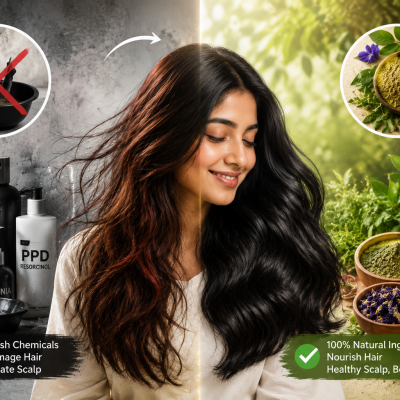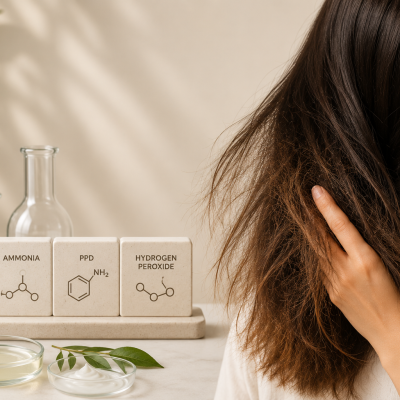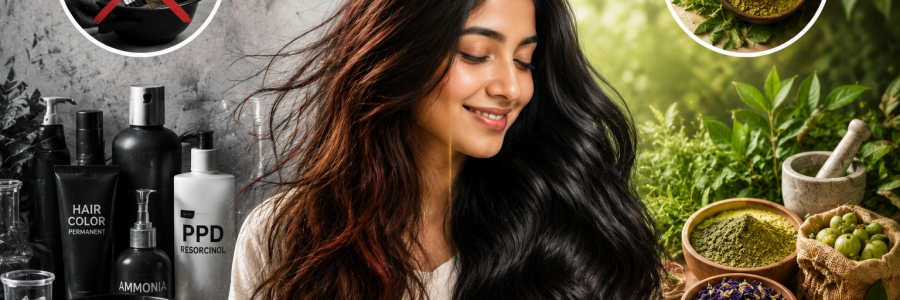
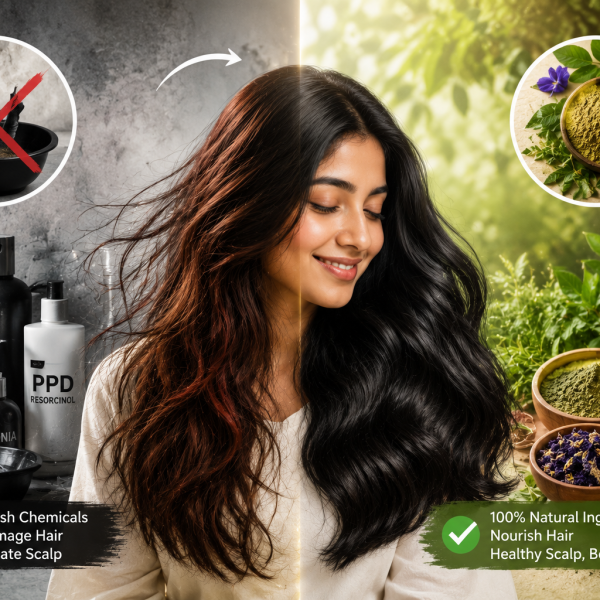
Hair care today is no longer just about changing appearance—it is about maintaining healthy hair and a healthy scalp. As consumers become more conscious of ingredients, many are choosing natural hair color and plant-based hair care products that support long-term hair health rather than relying on harsh chemicals.
This philosophy aligns with Fusion of Herbs, which combines traditional herbal wisdom with modern convenience to offer nature-inspired solutions for everyday hair care. To understand why the demand for natural hair color is growing, it is important to examine how conventional synthetic hair color systems can affect hair and scalp biology.
The global hair color market continues to expand, with increasing consumer interest in safer alternatives. Around 65% of consumers now prefer chemical-free options, highlighting the growing shift toward natural hair color and healthier hair care choices (Market Growth Reports et al.).
Let's Discuss
- 1. The Botanical Alternative: Henna, Indigo, and Traditional Indian Herbs
- 2. The Science Behind Henna (Lawsonia inermis)
- 3. The Science Behind Indigo (Indigofera tinctoria)
- 4. Understanding the Natural Hair Coloring Process
- 5. Why Natural Hair Color Takes Time to Develop
- 6. Long-Term Benefits of Natural Hair Color
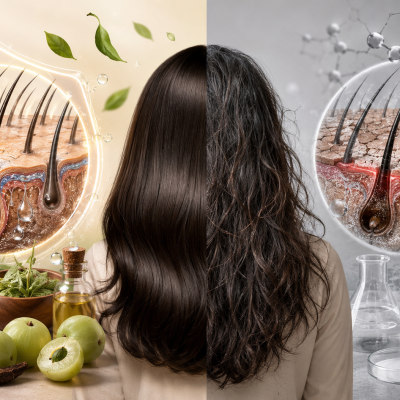
- 7. Scalp Health and the Potential Benefits of Natural Hair Care
- 8. Conclusion: Blending Tradition with Modern Hair Care
- 9. References
1. The Botanical Alternative: Henna, Indigo, and Traditional Indian Herbs
Natural hair color ingredients such as henna and indigo have been used for centuries as plant-based hair colorants. Unlike permanent synthetic hair dyes, natural hair color works through a different mechanism and is valued for both coloring and conditioning the hair.
Instead of relying on strong oxidizing chemicals to alter the hair’s internal structure, natural hair color deposits plant-based pigments onto and within the outer layers of the hair, forming a protective coating around the hair shaft. This helps provide natural-looking colour while improving the look and feel of the hair (Ali et al.).
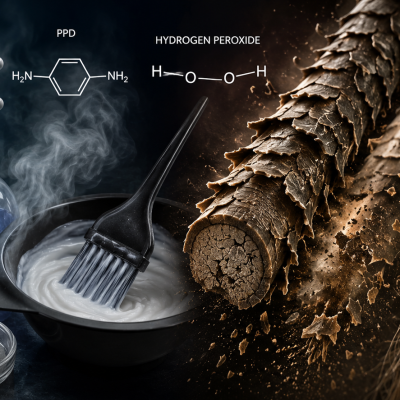
Unlike oxidative hair dyes that depend on strong alkaline agents and peroxide, natural hair color generally achieves its effect without aggressive chemical reactions. These differences help explain why botanical and synthetic hair coloring systems can have distinct effects on hair structure and long-term hair health. Read More
2. The Science Behind Henna (Lawsonia inermis)
The natural hair color properties of henna (Lawsonia inermis) come from a plant compound called lawsone, scientifically known as 2-hydroxy-1,4-naphthoquinone (C₁₀H₆O₃) (Lozza et al.). In fresh henna leaves, lawsone is present in an inactive form called hennosides. When dried henna powder is mixed with a mildly acidic liquid, such as lemon juice, amla tea, or warm water, these compounds break down and release active lawsone molecules, enabling natural hair color to develop (Lozza et al.).
Because lawsone is a small molecule, it does not require harsh alkaline chemicals to open the hair cuticle. Instead, it naturally penetrates the outer layers of the hair and binds to keratin proteins through a chemical reaction known as a Michael addition (Lozza et al.).
Research has shown that lawsone forms stable bonds with specific amino acid residues in keratin, including Thr289, His291, Phe295, Ser365, and Gln383, with a highly favorable binding energy (ΔG₍Bind₎ = -38.591 kcal/mol) (Lozza et al.). This unique mechanism explains why natural hair color derived from henna behaves differently from conventional synthetic dyes.
Unlike permanent synthetic hair dyes, lawsone does not destroy the hair’s natural melanin or break down its structural proteins. Instead, natural hair color coats and binds to the hair shaft, forming a protective layer that smooths the cuticle, enhances the hair’s appearance and feel, and can increase the apparent thickness and strength of individual strands without relying on synthetic silicone coatings (Lozza et al.).
Join the Journey Back to Natural Hair Care
We are building more than just products—we are building a community
that believes in thoughtful, effective, and responsible hair care.
3. The Science Behind Indigo (Indigofera tinctoria)
While henna naturally produces shades of copper, auburn, and red, indigo (Indigofera tinctoria) is traditionally combined with henna to create natural hair color in rich brown and black shades (Pattanaik et al.). The leaves of the indigo plant contain a natural precursor compound called indigene (Pattanaik et al.).
When indigo powder is mixed with warm water, natural enzymes convert indigene into an unstable compound called indoxyl (Pattanaik et al.). As soon as indoxyl comes into contact with oxygen in the air, it rapidly oxidizes and forms indigotin, the blue pigment responsible for indigo’s colouring effect (Pattanaik et al.).
This process makes indigo an essential ingredient in natural hair color formulations.
👉 When used together, henna’s warm red-orange pigments and indigo’s cool blue pigments create a complementary colour effect, producing a wide range of natural-looking brown and black natural hair color shades without relying on synthetic dyes (Pattanaik et al.).
4. Understanding the Natural Hair Coloring Process
When switching from synthetic dyes to natural hair color, it is important to understand that the colouring process is different. Synthetic hair dyes deliver quick results—typically within 30 to 45 minutes—by using strong chemicals to rapidly alter the hair structure. In contrast, natural hair color works through gradual diffusion, natural binding of plant pigments to the hair, and oxidation, making the colouring process slower and more progressive. Read more.
Although natural hair color requires more patience, many people prefer it as part of a gentler, plant-based hair care routine. The final colour may continue to deepen over the next 24–48 hours as the natural pigments oxidize, resulting in rich, natural-looking shades.
5. Why Natural Hair Colors Take Time to Develop
One of the biggest differences between natural and chemical hair colors is the time needed for the final color to develop. Synthetic dyes usually show their final shade immediately after rinsing, while natural dyes like henna and indigo continue to develop over the next 48 to 72 hours (Lozza, et al).
Right after application, the hair may appear brighter, warmer, or more coppery than expected because the color molecules have not fully stabilized (Lozza, et al). As they gradually react with oxygen in the air, the color deepens, becomes richer, and settles into its final shade (Pattanaik, et al).
For this reason, it is generally recommended not to use any chemical shampoo immediately or wash the hair only with fusion of herbs hair wash powder (since it is all natural) which will allow the natural pigments enough time to fully oxidize and develop (Lozza, et al).
6. Long-Term Benefits of Natural Hair Color
Although natural hair color made with henna and indigo may take longer to develop initially, it can provide long-lasting colour while supporting a natural herbal hair care routine. With just 1–2 applications, many users can achieve rich, natural-looking black shades using Fusion of Herbs 100% Natural Hair Color.
As the plant-based pigments build up with repeated applications, natural hair color becomes more stable and resistant to fading (Lozza et al.). Over time, the lengths of the hair may require little or no recolouring, with maintenance focused mainly on new root growth.
Regular use of natural hair color also forms a protective botanical coating on the hair shaft, helping hair appear thicker, smoother, and glossier while reducing the need for frequent full-length applications (Lozza et al.). This gradual build-up makes it easier to maintain vibrant colour as part of a long-term herbal hair care routine.
7. Scalp Health and the Potential Benefits of Natural Hair Care
Switching to natural hair color is not only about colouring hair naturally but also about supporting a healthier scalp care routine. A healthy scalp depends on a balanced microbiome, proper sebum production, a mildly acidic pH, and a stable population of naturally occurring microorganisms. Repeated exposure to harsh alkaline chemicals and dye residues may disrupt this balance, contributing to scalp irritation, flaking, and conditions such as seborrheic dermatitis in susceptible individuals (Palaniappan et al.).
For centuries, Lawsonia inermis (henna) has been used in traditional Ayurvedic and Unani medicine for hair and scalp care. Modern research has shown that henna possesses antibacterial, antifungal, and antimicrobial properties, making it an important ingredient in natural hair color formulations (Lozza et al.).
Dandruff and seborrheic dermatitis are commonly associated with the overgrowth of Malassezia globosa, a naturally occurring yeast that feeds on scalp oils. In some individuals, the breakdown of these oils produces irritating byproducts that trigger itching, redness, inflammation, and flaking (Palaniappan et al.).
When applied as a paste, henna has traditionally been used to absorb excess oil and help create conditions that may reduce fungal overgrowth on the scalp (Lozza et al.). By supporting scalp hygiene and managing excess sebum, natural hair color formulations containing henna may contribute to a healthier scalp environment and improved comfort (Lozza et al.).
Many users also report a cooling and soothing sensation during henna application, providing temporary relief from scalp discomfort (Lozza et al.). In addition, henna contains natural tannins and plant compounds that have been studied for their potential benefits to scalp health and local circulation, which may support healthy hair growth as part of an overall hair care routine (Lozza et al.).
Overall, natural hair color made with henna and indigo offers a botanical approach that combines plant-based colouring with traditional scalp care practices, providing an alternative to hair care routines that rely heavily on repeated chemical processing (Lozza et al.).
8. Conclusion: Blending Tradition with Modern Hair Care
The science of hair coloring shows that effective results do not have to come at the cost of hair health. By moving away from harsh chemicals and choosing natural hair color, it is possible to achieve beautiful, long-lasting colour while supporting long-term hair wellness.
In contrast, botanical ingredients such as Lawsonia inermis (Henna) and Indigofera tinctoria (Indigo) colour the hair through a different mechanism. Their natural pigments bind to the hair without relying on aggressive alkaline processing, making natural hair color a gentler alternative while also forming a protective coating around the hair shaft (Lozza et al.; Pattanaik et al.).
Beyond colouring, these traditional botanicals have long been valued for their scalp-supporting properties. Their naturally occurring antimicrobial and astringent characteristics may help maintain a cleaner scalp environment, regulate excess oil, and contribute to overall scalp comfort (Lozza et al.).
Although natural hair color requires more patience and an understanding of the natural oxidation process, many users value its long-term benefits. With repeated applications, it can build rich, lasting colour while helping maintain the appearance and feel of healthy hair.
The future of hair care lies in informed, conscious choices that respect the biology of both hair and scalp. The Fusion of Herbs philosophy embraces this approach by combining traditional botanical wisdom with modern innovation, offering 100% natural hair color that is Powered by Nature, Backed by Innovation—where beautiful colour and long-term hair wellness go hand in hand.
9. References:
- Lozza, L., Moura-Alves, P., Domaszewska, T., et al. (2020) ‘The Henna pigment Lawsone activates the Aryl Hydrocarbon Receptor and impacts skin homeostasis’, Scientific Reports, 10, 65510. Available at: https://pmc.ncbi.nlm.nih.gov/articles/PMC6659674/
- Market Growth Reports (2024) Hair Colour Market Overview. Available at: https://www.marketgrowthreports.com/market-reports/hair-colour-market-105888
- Pattanaik, L., Naik, S.N., Hariprasad, P. and Padhi, S.K. (2021) ‘Influence of various oxidation parameters for natural indigo dye formation from Indigofera tinctoria L. biomass’. Available at: https://www.researchgate.net/publication/351834939