For many women between 30 and 50, hair fall quietly becomes a source of stress. You try different shampoos, switch routines, invest in salon treatments—but the shedding continues. At some point, it becomes clear: the problem isn’t just what you’re using—it’s how you’re approaching it.
Hair fall is rarely a surface-level issue. It’s your body’s way of signalling imbalance. Learning how to stop hair fall naturally isn’t about finding another “miracle product.” It’s about shifting from quick fixes to understanding what your body truly needs.
Real, lasting hair health comes from restoring balance—both internally and externally. When you support the environment in which your hair grows, results follow naturally (Trüeb, 2009).
Let's Discuss
1. Decoding the Root Causes: Why Your Hair Is Falling
Before looking for solutions, it’s important to understand why hair fall happens. In most cases, it’s a combination of everyday factors:
- Nutritional Deficiencies
Hair follicles need nutrients like protein and iron to grow. When your body lacks these, it prioritizes vital organs—leaving your hair weak and prone to shedding. Iron deficiency, in particular, has been strongly associated with hair loss in women (National Institutes of Health, Dermatology Practical & Conceptual).
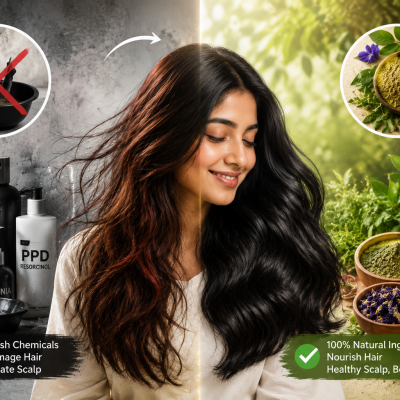
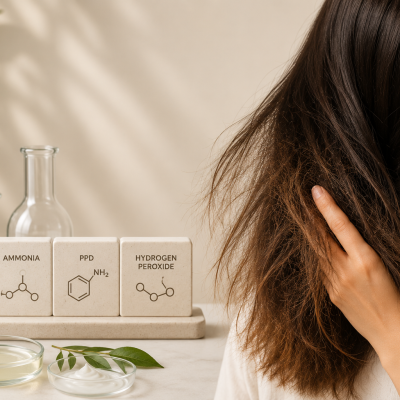
- Chemical Overload
Harsh shampoos often strip natural oils, disrupting your scalp’s balance. This can lead to dryness, irritation, or even excess oil production—all of which affect hair health. Read More.
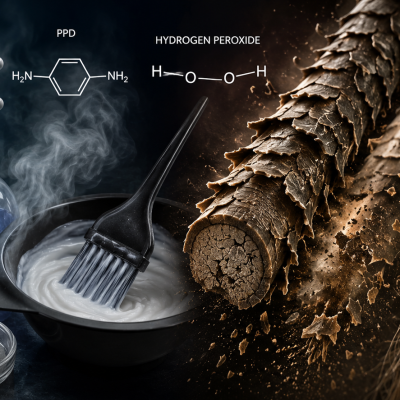
Frequent use of products with sulfates, parabens, and synthetic ingredients creates buildup, preventing your scalp from functioning naturally. Cosmetic formulations are often designed for immediate results rather than long-term scalp health (Draelos, 2010, Colloids and Surfaces B: Biointerfaces).
- Stress & Lifestyle
Chronic stress and inadequate sleep increase cortisol levels, pushing hair follicles into a resting phase. This often leads to noticeable hair fall weeks or months later—a condition clinically recognized as Telogen Effluvium (Hasan, 2022).
Understanding these root causes helps shift your focus from temporary fixes to long-term healing.
2. The Step-by-Step Natural Recovery Plan
Transitioning to a natural path is a comprehensive hair fall treatment at home that honours both your internal health and your external ritual.
Step 1: Build a Strong Nutritional Foundation
Follicle strength begins on your plate. In an Indian context, we are blessed with superfoods that are non-negotiable for hair health.
Focus on protein-rich Lentils (Dals), Paneer, and Eggs to provide the building blocks for keratin. Incorporate iron-rich Spinach (Palak) and Methi seeds, as iron is what carries oxygen to your hair roots. For a boost of Vitamin C—which helps iron absorption—include Amla or a few Curry Leaves in your daily diet.
Hydration is equally vital; water ensures the transport of these nutrients to your scalp. Nutritional balance plays a direct role in maintaining healthy hair growth cycles (Dermatology Practical & Conceptual).
Step 2: Use Supplements Wisely
If your diet has gaps, supplements can offer a supportive bridge. However, a consultation-first approach is essential.
Speak with a professional to check your Vitamin D3 and B12 levels before starting any regimen, as unnecessary supplementation may not address the root cause
Step 3: Exercise & Relaxation
Regular exercise and relaxation practices—such as meditation and adequate sleep—play a crucial role in managing stress. These habits help regulate stress hormones and maintain overall hormonal balance in the body.
Since hormonal imbalance is a key contributor to hair fall, adopting these practices can significantly support healthier hair over time (Hasan, 2022).
Step 4: Switch to Gentle, Botanical Cleansing
It is time to unlearn the habit of using liquid, chemical-laden shampoos. Embrace the “Fusion of Herbs” philosophy by switching to a powder-based wash.
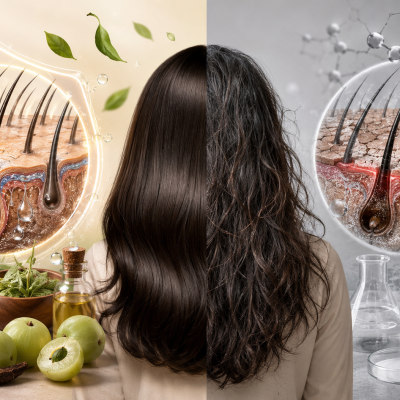
Unlike liquid soaps filled with preservatives, traditional herbs like Amla, Reetha, and Shikakai offer gentle, effective cleansing. Aloe Vera and Neem soothe the scalp, while Methidana and Curry Leaves provide topical nourishment.
Research in Journal of Ethnopharmacology and Phytotherapy Research highlights the antioxidant, antimicrobial, and scalp-supportive properties of these botanicals.
This approach also helps maintain the natural balance of the Skin Microbiome, which plays a critical role in scalp health (Experimental Dermatology). Read More.
👉 Hair fall doesn’t stop with a product — it stops when you fix the system that supports hair growth.Hair fall improves when the body is nutritionally and hormonally supported — not just externally treated (Dermatology Practical & Conceptual; Hasan, 2022).
Join the Journey Back to Natural Hair Care
We are building more than just products—we are building a community
that believes in thoughtful, effective, and responsible hair care.
3. Managing Expectations: The Timeline of Transformation
Natural recovery is a journey of restoration, not a quick fix. Your hair will move through distinct phases as it returns to its natural vigor.
Phases of Natural Hair Recovery
Phase | Duration | Expected Experience |
Phase 1 | Weeks 1–2 | Scalp Detox: The scalp sheds chemical residues. You may notice a change in oil production as it finds its natural balance. |
Phase 2 | Weeks 3–6 | Improved Texture: Thanks to a residue-free wash, hair feels lighter and fresher. Shedding begins to stabilize. |
Phase 3 | Month 3+ | Visible Strength: Follicles are now nourished from within. You’ll see improved volume and the emergence of new growth. |
Hair growth cycles naturally take time, and visible improvement typically occurs over several weeks to months (American Academy of Dermatology; International Journal of Trichology).
👉 In the debate of chemical vs natural shampoo, the choice is between a temporary cosmetic mask and the restoration of genuine follicular health.Hair recovery follows a biological cycle — visible improvement takes weeks to months as follicles reset and regrow (American Academy of Dermatology; International Journal of Trichology).
4. Conclusion: Reclaiming Your Hair’s Natural Strength
Healthy, resilient hair is the result of balance and respect for your biology. By moving away from harsh synthetics, you break the cycle of damage and begin a future of natural strength.
Start this journey by simplifying your ritual. Choose a traditional herbal shampoo powder—one that is sulfate-free, preservative-free, and fragrance-free.
By embracing the “Mix – Shake – Apply” method with Fusion of Herbs, you can reclaim the power of tradition and build a more sustainable, balanced approach to hair care.
5. FAQ: Common Questions
Can I really stop hair fall at home?
Yes. By addressing root causes like nutrition, stress, and scalp health, natural methods often deliver more sustainable results than cosmetic treatments (International Journal of Trichology).
How long do natural remedies take to work?
You may notice a cleaner scalp immediately, but reduced hair fall typically takes 3–6 weeks of consistent care (American Academy of Dermatology).
Why choose herbal cleansing over shampoo?
Herbal powders contain active compounds without synthetic additives, supporting a healthier scalp environment (Journal of Ethnopharmacology).
Does stress cause immediate hair fall?
Not instantly. Stress triggers delayed shedding by disrupting the hair growth cycle, often weeks later (Nature Reviews Endocrinology). Learn More.
6. References:
- Trüeb, R.M. (2009) ‘Oxidative stress in ageing of hair’, International Journal of Trichology, 1(1), pp. 6–14. Available at: https://pubmed.ncbi.nlm.nih.gov/20805969/
- Draelos, Z.D. (2010) ‘Hair cosmetics: An overview’, International Journal of Trichology, 2(2), pp. 42–46.
- National Institutes of Health (n.d.) ‘Iron deficiency and hair loss’. Available at: https://pubmed.ncbi.nlm.nih.gov/21679815/
- American Academy of Dermatology (n.d.) ‘Hair and scalp care’. Available at: https://www.aad.org/public/everyday-care/hair-scalp-care
- Dermatology Practical & Conceptual (n.d.) ‘Nutritional deficiencies and hair loss’. Available at: https://dpcj.org/index.php/dpc/article/view/dermatol-pract-concept-articleid-dp0701a01
- Colloids and Surfaces B: Biointerfaces (2025) ‘Surfactant-containing detergents: Impacts on dermal health’. Available at: https://www.sciencedirect.com/science/article/abs/pii/S0927776525005338
- Experimental Dermatology (2025) ‘Unlocking the secrets of the hair microbiome: From scalp health to therapeutic advances’. Available at: https://www.sciencedirect.com/science/article/pii/S2950194625001219
- Journal of Ethnopharmacology (n.d.) ‘Ethnopharmacology and hair: Indian perspectives’. Available at: https://www.academia.edu/127508464/Ethnopharmacology_and_hair_Indian_perspectives
- Phytotherapy Research (n.d.) ‘Plant-based compounds in hair growth and scalp care’. Available at: https://pmc.ncbi.nlm.nih.gov/articles/PMC9963650/
- Hasan, R., Juma, H., Eid, F.A., Alaswad, H.A., Ali, W.M. and Aladraj, F.J. (2022) ‘Effects of hormones and endocrine disorders on hair growth’, Cureus. Available at: https://pmc.ncbi.nlm.nih.gov/articles/PMC9788837/