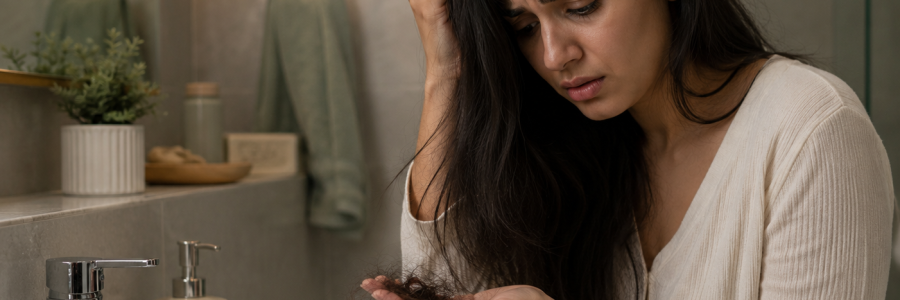
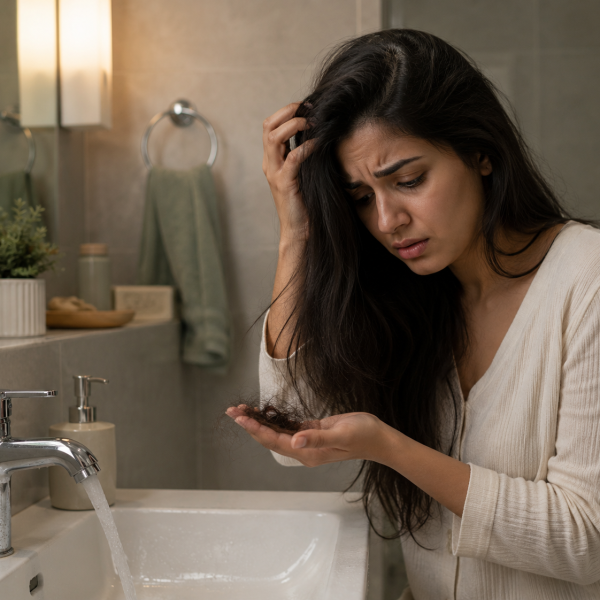
We spend a lot of time choosing the right shampoo, oil, or serum for our hair. But there’s one important factor most people ignore—the water we use.
Water is not just a neutral ingredient. Its quality changes depending on where you live, and this can directly affect how your hair looks and feels. In some places, your routine works perfectly, giving you soft, shiny, and healthy hair. But in other areas, the same routine can suddenly lead to dryness, roughness, and hair fall.
This is what we call the “Water-Hair Paradox.” It simply means that your hair results can change based on the type of water you use, even if everything else stays the same.
The main reason behind this is hard water. It contains minerals that react with regular shampoos and leave a layer on your hair. This buildup makes hair dull, dry, and more prone to breakage.
So, if your hair care routine isn’t working the way it should, the problem might not be your products—it could be your water. Understanding this can help you take better care of your hair in a smarter and more effective way.
Let’s Discuss
-
1. Why Hard Water Ruins Your Shampoo
-
2. How Hard Water Causes Hair Fall
-
3. Hard Water Problem in Indian Cities
-
4. The Herbal Alternative: Switching to Residue-Free Hair Care
-
5. Simple Hair Care Tips for Hard Water Areas
-
6. Changing Trends in Hair Care Choices
-
7. Conclusion: Back to Simple, Natural Hair Care
-
8. References
1. Why Hard Water Ruins Your Shampoo
To understand why your shampoo sometimes stops working, you need to look at how water and shampoo interact. Hard water contains high levels of minerals like calcium (Ca²⁺) and magnesium (Mg²⁺) (Srinivasan et al., 2013).
Most shampoos are made with cleansing agents called surfactants, such as SLS and SLES. These are designed to remove oil, dirt, and buildup by forming tiny cleansing bubbles called micelles (Walters et al., 2016). But here’s the problem—when these surfactants come in contact with hard water, the minerals in the water react with them. The presence of chelating agents (which capture hardness ions in hard water) in shampoos also are unable to perform completely when the water hardness is high.
This leads to formation of sticky, insoluble substance commonly known as “scum” (Walters et al., 2016). Instead of cleaning your hair, the shampoo loses its effectiveness and leaves behind residue. This is why your shampoo doesn’t lather well in hard water and your hair starts feeling rough, dull, and heavy.
Most people try to fix this by using more shampoo, but that only makes things worse. More shampoo means more reaction with minerals, leading to even more buildup (Evans et al., 2011).
On the other hand, natural powder-based cleansers, especially those made with non-ionic botanical ingredients, don’t react the same way with hard water. They clean the hair without forming this residue, making them more effective across different water types (Oleszek & Hamed, 2010; Wojtoń et al., 2021).
The real problem with hard water buildup is that it creates a stubborn layer on your hair. This layer acts like a barrier, blocking moisture from entering the hair shaft. Even if you use good conditioners or oils, they can’t properly absorb because of this coating (Evans et al., 2011).
As a result, your hair becomes dry from the inside over time. This hidden dryness weakens the outer layer of the hair, causing the cuticle (the protective layer) to lift, crack, and break away—a process known as cuticle damage (Evans et al., 2011).
When this happens, hair becomes rough, frizzy, and very brittle. It loses its smooth texture and becomes harder to manage, leading to more breakage and an overall unhealthy look (Evans et al., 2011).
2. How Hard Water Causes Hair Fall
When people notice hair fall, it’s important to understand whether it’s coming from internal health issues like stress, genetics, or nutrition, or from external factors like the water they use (Imtiaz et al., 2017). In many cases, what looks like hair thinning is actually hair breakage caused by damage, not true hair loss (Luqman et al., 2018). Read More.
Hard water plays a big role in this kind of damage. It affects your hair and scalp in three main ways—
a. Scalp Damage and Hair Weakening from Hard Water
Hard water can disturb the natural balance of your scalp. A healthy scalp is slightly acidic, with a pH between 4.5 and 5.5, which helps protect it and keep hair strong (Luqman et al., 2018). But hard water is usually more alkaline (above pH 7), and when you regularly wash your hair with it, this balance gets disrupted (Khanpara et al., 2012).
Because of this, the outer layer of your hair opens up, allowing minerals like calcium and magnesium to enter deep inside the hair strand (Luqman et al., 2018). These minerals can then damage the internal protein structure of the hair, weakening it from within and making it more prone to dryness and breakage. Over time, this can affect the natural hair growth cycle, causing hair to enter the shedding phase faster than normal, which results in increased hair fall (Imtiaz et al., 2017).
b. More Friction, More Hair Breakage
Hard water leaves mineral deposits on your hair that make the surface rough. Normally, healthy hair has a natural protective layer that keeps it smooth and reduces friction between strands (Sergi et al., 2023). But mineral buildup and soap residue can strip away this layer, exposing the inner hair structure and making it more prone to damage (Sergi et al., 2023).
As a result, hair strands start rubbing more against each other, increasing friction (Sergi et al., 2023). When your hair is wet or in humid conditions, this problem becomes worse because water creates extra stickiness between strands, leading to more tangling (Sergi et al., 2023).
Studies also show that hair exposed to hard water becomes weaker and loses strength compared to hair washed with soft water (Luqman et al., 2018). Over time, this leads to more breakage and noticeable hair fall.
c. Clogged Hair Roots and Scalp Buildup
Hard water can also cause hair fall by blocking the roots of your hair. When minerals from hard water mix with shampoo and other chemicals, they form a sticky residue that builds up on the scalp (Walters et al., 2016). This layer can clog the tiny openings of hair follicles, making it harder for hair to grow properly. It also traps oil and dirt, creating a perfect environment for dandruff and scalp irritation (Imtiaz et al., 2017).
👉 Over time, this buildup affects scalp health and weakens hair growth from the roots.
Join the Journey Back to Natural Hair Care
We are building more than just products—we are building a community
that believes in thoughtful, effective, and responsible hair care.
3. Hard Water Problem in Indian Cities
To understand how serious the hard water problem is, we need to look at what’s happening to groundwater, especially in urban India. Due to rapid urbanization, industrial waste, poor sewage systems, and chemical runoff from agriculture, water quality has worsened significantly across many regions (CGWB, 2024; Takyar, 2018).
Areas like Gurugram and parts of the NCR are among the most affected. Studies show that the level of Total Dissolved Solids (TDS), which indicates water hardness, is extremely high—reaching up to 5,140 mg/L in some areas, far above the safe limit of 500 mg/L set by standards (Takyar, 2018). Such high mineral content makes the water very harsh for both skin and hair.
In addition to hardness, harmful substances like chlorides, nitrates, and even heavy metals like lead and cadmium have been found in increasing amounts (Takyar, 2018). On a larger scale, more than half of India’s districts are dealing with serious groundwater contamination issues (CGWB, 2024). Major cities like Delhi, Bangalore, Mumbai, and Hyderabad commonly have hard water levels much higher than what is considered ideal (CGWB, 2024).
👉For people living in these cities, this means that daily activities like washing hair expose them to harsh, mineral-heavy water. Over time, this can damage the scalp, weaken hair, and contribute to common problems like hair fall and dandruff.
4. The Herbal Alternative: Switching to Residue-Free Hair Care
Since regular liquid shampoos react with hard water and create buildup, it’s important to shift to a better approach. The “Fusion of Herbs” method focuses on simple, natural hair care inspired by traditional Indian practices, but designed for modern lifestyles. This allows a higher concentration of natural ingredients that work effectively even in hard water, helping to clean the scalp without leaving residue and supporting healthier hair over time. Read More.
a. The Power of Natural Ingredients for Hair Care
Traditional ingredients like Reetha and Shikakai are rich in natural cleansers called saponins (Oleszek & Hamed, 2010; Wojtoń et al., 2021). These saponins clean the hair by removing oil and dirt, but without reacting with the minerals in hard water. This means they don’t create the heavy residue or “scum” that synthetic shampoos often leave behind (Oleszek & Hamed, 2010) making them especially useful for people dealing with hard water. Amla, Reetha, and Shikakai form a powerful natural combination for gentle hair care and maintaining the right scalp balance.
b. Aloe Vera and Neem: Soothing and Protecting the Scalp
Aloe vera and neem help calm and protect the scalp, especially from damage caused by hard water.
c. Methi and Curry Leaves: Nourishing and Strengthening Hair
They also contain antioxidants that protect the scalp and hair from damage due to hard water (Imtiaz et al., 2017).
Together, these ingredients help make hair stronger, healthier, and more resilient.
5. Simple Hair Care Tips for Hard Water Areas
If you live in an area with hard water or travel often where water quality keeps changing, having a consistent hair care routine becomes very important. Here are the simple tips for managing hard water hair
- The Extended Rinse: In high-mineral, high-TDS areas, it is advisable to double your standard rinsing time. Because hard water makes it significantly harder to lift residual debris, sustained water flow is your best ally in ensuring all chelated minerals and particulates are entirely removed from the hair canopy.
- pH Restoration: As established, hard water is typically highly alkaline (Khanpara et al., 2012). Using Shikakai within the powder blend (already available in Fusion of Herbs) is a strategic chemical advantage. Its natural acidity provides an immediate protonation effect, helping to tightly close the hair cuticle, restoring the scalp’s acidic pH (4.5–5.5) (Khanpara et al., 2012).
- Travel Consistency: Powder is the ultimate travel-friendly, structurally stable solution. By carrying your own “Fusion of Herbs” formulation, you entirely eliminate “water shock”. Since it works well regardless of water quality or mineral levels, it gives you reliable results wherever you are. This helps protect your hair from damage, reduces buildup, and keeps your routine simple and effective even in changing environments.
6. Changing Trends in Hair Care Choices
Scientific understanding of hard water and hair damage is now clearly reflected in how consumers are behaving, especially in urban India. As groundwater quality continues to decline, people are becoming more aware of how water affects their hair and are making more informed choices (CGWB, 2024).
The Indian hair care market, valued at around USD 4.1 billion, is going through a major shift (CGWB, 2024). Consumers are moving away from regular chemical-based shampoos and looking for more natural and targeted solutions (Imtiaz et al., 2017). Online search trends show a strong increase in queries related to hard water problems, such as hair loss, damage repair, and solutions for mineral buildup (Evans et al., 2011; Imtiaz et al., 2017).
This shows that people are realizing that regular conditioners and serums don’t work well when hair is coated with mineral buildup (Evans et al., 2011; Imtiaz et al., 2017). Many users, especially in cities like Delhi, Mumbai, and Bangalore, are actively discussing these issues online and searching for better solutions like herbal, clarifying, and residue-free hair care methods (Imtiaz et al., 2017; CGWB, 2024). Brands that offer natural, science-backed, and residue-free products are gaining strong trust and popularity among these consumers.
7. Conclusion: Back to Simple, Natural Hair Care
Dealing with today’s water quality issues requires a smarter and simpler approach to hair care. The best solution lies in combining traditional ingredients like Amla, Reetha, and Shikakai with modern, easy-to-use methods. These time-tested herbs offer a natural way to care for hair, especially in challenging conditions.
It is now clear that water is not just a neutral part of your routine. Hard water, filled with minerals like calcium and magnesium, can damage hair by making it rough, weak, and prone to breakage. It also creates buildup that blocks moisture and reduces the effectiveness of regular shampoos.
By moving away from harsh chemical-based shampoos and choosing Fusion of Herbs, a gentle, plant-based ingredients, you can avoid this damage. Natural saponins clean the hair effectively without reacting with hard water, helping prevent buildup and keeping the scalp balanced.
When combined with nourishing ingredients like methi, aloe vera, and curry leaves, this approach not only cleans but also helps repair and strengthen the hair over time. Choosing a residue-free, powder-based routine is not just about hair care—it’s about adopting a cleaner, safer, and more mindful way of living.
8. References
- ACS et al. (2024) Evaluation of Natural Organic Additives as Eco-friendly Inhibitors for Calcium and Magnesium Scale Formation in Water Systems. American Chemical Society. Available at: https://pubmed.ncbi.nlm.nih.gov/39582755/
- CGWB (Central Ground Water Board) (2024) Annual Ground Water Quality Report 2024. Ministry of Jal Shakti. Available at: https://sandrp.in/2025/01/30/groundwater-2024-increasing-contamination-tip-of-a-toxic-berg/
- Evans, A.O., Marsh, J.M. & Wickett, R.R. (2011) The uptake of water hardness metals by human hair. Journal of Cosmetic Science, 62(4), pp. 383-391. Available at: https://www.triprinceton.org/post/aqua-mane-ia-the-science-and-art-of-water-on-your-hair
- Gnanamoorthy, R. et al. (2025) Friction characteristics of human hair under dry and wet conditions at different applied loads. Tribology in Industry. Available at: https://www.tribology.rs/journals/2025/2025-2/10-1848.pdf
- Imtiaz, et al. (2017) Scalp Condition Impacts Hair Growth and Retention via Oxidative Stress. International Journal of Trichology, 10, pp. 262-270. Available at: https://pmc.ncbi.nlm.nih.gov/articles/PMC11124163/
- Khanpara, K. et al. (2012) A detailed investigation on shikakai (Acacia concinna Linn.) fruit. Journal of Current Pharmaceutical Research, 9(1), pp. 06-10. Available at: https://www.researchgate.net/publication/280313608_A_detailed_investigation_on_shikakai_Acacia_concinna_Linn_fruit
- Luqman, M.W. et al. (2018) Effect of topical application of hard water in weakening of hair in men. Journal of Ayub Medical College Abbottabad. Available at: https://pmc.ncbi.nlm.nih.gov/articles/PMC6028999/
- Murata, K. et al. (2012) Promotion of hair growth by traditional oriental plants. Journal of Natural Medicines. Available at: https://pmc.ncbi.nlm.nih.gov/articles/PMC12678491/
- Oleszek, W. & Hamed, A. (2010) Saponin-Based Surfactants. MDPI. Available at: https://www.mdpi.com/2413-4155/3/4/44
- Sergi, et al. (2023) Friction and capillary condensation in human hair. Nanoscale. Available at: https://pubs.rsc.org/en/content/articlehtml/2023/nr/d2nr05545g
- Srinivasan, G. et al. (2013) Effects of hard water on hair. International Journal of Trichology, 5(3), pp. 137-139. Available at: https://pubmed.ncbi.nlm.nih.gov/24574692/
- Srinivasan, G. & Rangachari, S. (2016) Scanning electron microscopy study of hair shaft changes related to hardness of water. International Journal of Dermatology. Available at: https://ijdvl.com/scanning-electron-microscopy-study-of-hair-shaft-changes-related-to-hardness-of-water/
- Takyar, A. (2018) Gurgaon’s groundwater quality worsening every year. Times of India. Available at: https://timesofindia.indiatimes.com/city/gurgaon/gurgaons-groundwater-quality-worsening-every-year/articleshow/64471112.cms
- Walters, R.M. et al. (2016) Hard water softening effect of a baby cleanser. Clinical, Cosmetic and Investigational Dermatology, 9, pp. 339-345. Available at: https://www.dovepress.com/article/download/29349
- Wojtoń, P. et al. (2021) Surface activity of natural surfactants extracted from Sapindus mukorossi and Sapindus trifoliatus soapnuts. Colloids and Interfaces, 5(1), p. 7. Available at: https://www.mdpi.com/2504-5377/5/1/7