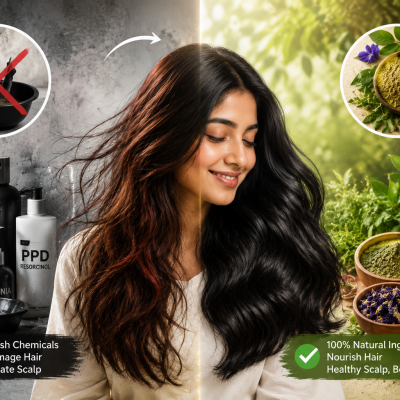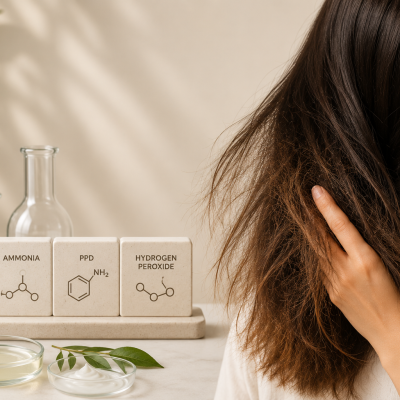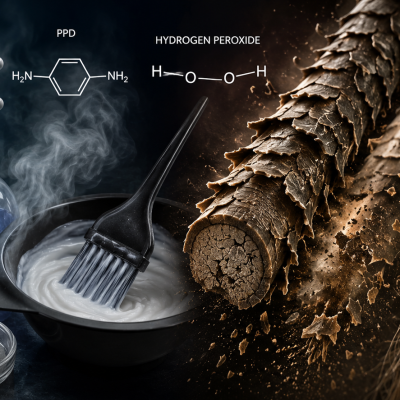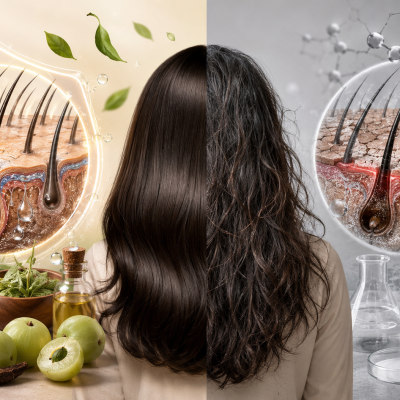
In today’s beauty and haircare industry, “Hair Botox” has become a very popular salon treatment, especially for people looking for instant smoothness, frizz control, and shiny hair. The treatment is heavily marketed as a quick solution for damaged or unmanageable hair. Because modern consumers often want fast and visible results, such treatments have gained strong demand worldwide. In fact, the global hair botox market was valued at 314.2 million USD in 2022 and is expected to grow at a CAGR of 8.0% until 2030 (Grand View Research, 2023).
However, it is important to understand the difference between temporary cosmetic improvement and real, long-term hair health. Despite the medical-sounding name, “Hair Botox” does not contain botulinum toxin and does not involve injections of any kind (Sperling et al., 2023). Actual botulinum toxin is used in dermatology for specific medical conditions such as excessive sweating, scalp-related issues, and certain hair loss treatments (Sperling et al., 2023).
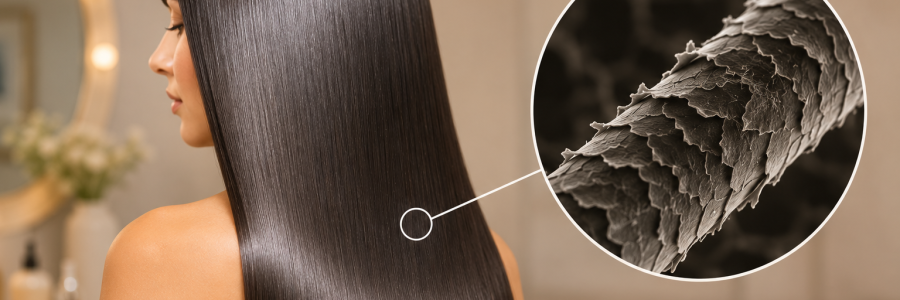
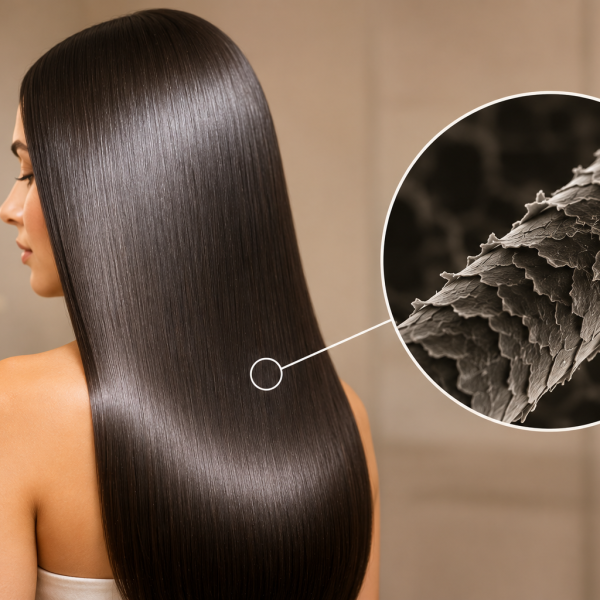
The salon treatment called “Hair Botox” is mainly a deep conditioning process that uses synthetic ingredients such as polymers, siloxanes, and high-heat sealing methods to create a temporary smooth appearance on the hair surface (Zhu et al., 2020). While the results may look attractive initially, the process focuses more on surface-level coating rather than restoring the natural strength and balance of the hair and scalp.
This report aims to explain the science behind these treatments in simple terms by examining how chemical sealants work, how excessive heat affects hair structure, and how such procedures may impact the scalp environment over time. It also explores herbal and botanical alternatives that focus on supporting healthier, more sustainable hair care naturally.
Let's Discuss
- 1. Understanding the “Hair Botox” Label: Marketing vs. Reality
- 2. The Quick-Fix Problem: Instant Shine vs. Long-Term Hair Damage
- 3. Side Effects of Hair Botox and the “Confused Remedy” Problem
- 4. Herbal Alternatives for Long-Term Hair Health
- 5. Conclusion - Choosing Long-Term Hair Health Over Temporary Shine
- 6. References
1. Understanding the “Hair Botox” Label: Marketing vs. Reality
The hair care industry often uses medical or scientific-sounding words to make products appear more advanced and effective. The term “Hair Botox” is one such example. By using the word “Botox,” brands create an impression of deep repair, anti-aging benefits, and hair restoration, even though the treatment itself is not medical in nature (Jha, 2023). In reality, Hair Botox mainly works on the outer surface of the hair and does not repair the hair internally at a cellular level (MDPI, 2023).
a. The Chemistry of Synthetic Sealants
The treatment mainly depends on synthetic ingredients such as proteins, amino acids, silicones, and polymer-based coating agents that temporarily cover the hair cuticle to make hair look smoother and shinier (Biopol Chemicals, 2023). Common silicones used in these treatments include dimethicone, cyclopentasiloxane, and amodimethicone, which are known for their ability to spread easily across the hair surface and create a water-resistant coating (Biopol Chemicals, 2023). Their molecular structure gives them flexibility, allowing them to form a smooth, glossy layer over the hair shaft that reflects light and creates an artificial shine similar to healthy hair (Zhu et al., 2020).
Hair Botox treatments also use positively charged conditioning polymers such as Polyquaternium-10 (Elchemy, 2023). Damaged hair usually carries a negative charge because of cuticle damage and protein loss. The positive charge of these polymers helps them stick strongly to damaged areas of the hair through electrostatic attraction (Elchemy, 2023). This creates a coating or film over rough and porous sections of the hair, making the hair feel softer and smoother temporarily. However, this process mainly hides the visible signs of damage rather than actually repairing the natural keratin structure of the hair internally.
b. Chemical Safety Concerns Behind Hair Botox Treatments
One important concern with Hair Botox treatments is the way they control frizz and create a very straight, smooth appearance. Many brands promote these treatments as safer and “formaldehyde-free” alternatives to traditional keratin or Brazilian treatments. However, some formulations still use chemicals known as “formaldehyde releasers” or similar substitute acids to achieve the same smoothing effect (Environmental Working Group, 2011).
Ingredients such as glyoxylic acid, glyoxyloyl carbocysteine, and timonacic acid can behave similarly to formaldehyde when exposed to the very high heat used during salon straightening procedures (PMC, 2022). Research shows that during the heat-sealing process, glyoxylic acid can break down and release formaldehyde gas into the air (PMC, 2022). This creates potential health concerns for both salon workers and customers, even when the product is marketed as toxin-free or safer than traditional treatments.
Formaldehyde is classified as a known human carcinogen by organizations such as OSHA and the EPA. Even low airborne exposure above 0.1 ppm may cause breathing problems, eye irritation, skin reactions, and discomfort (Environmental Working Group, 2011).
Ingredient analysis of many commercial Hair Botox products also shows the presence of complex synthetic chemicals such as PEG-150 pentaerythrityl tetrastearate, methylchloroisothiazolinone, and polyether compounds (EWG, 2023). These treatments depend heavily on external chemical coatings and intense heat processes to bind the ingredients onto the hair surface. While they may provide temporary smoothness and shine, repeated exposure to such chemical processes may raise concerns about long-term hair and scalp health.
2. The Quick-Fix Problem: Instant Shine vs. Long-Term Hair Damage
Many people are attracted to Hair Botox treatments because they give immediate results such as shiny, smooth, and frizz-free hair. However, this quick improvement can sometimes hide gradual damage happening inside the hair fiber. The main concern is not only the chemicals used in the treatment, but also the extremely high heat required to lock these products onto the hair shaft.
a. The Thermodynamics of Protein Denaturation
To create the glossy finish promised by these treatments, stylists usually use flat irons at temperatures between 150°C and 240°C (300°F to 450°F), often passing over each section of hair multiple times (The Keratinize, 2023). Scientific studies suggest that hair can begin to experience structural damage at much lower temperatures, around 60°C (Korean Society for Laser Medicine and Surgery, 2025). When hair is repeatedly exposed to temperatures above 55°C to 65°C, the natural keratin proteins inside the hair start to break down and lose their structure (Korean Society for Laser Medicine and Surgery, 2025).
Advanced studies using Confocal Raman spectroscopy have shown that continuous exposure to high heat weakens important disulfide bonds inside the hair, which are responsible for strength and elasticity (Korean Society for Laser Medicine and Surgery, 2025). Research found a 19% reduction in these critical bonds after repeated heat exposure, showing significant internal damage to the hair structure (Korean Society for Laser Medicine and Surgery, 2025). Other scientific studies also show that temperatures close to 200°C to 237°C can lead to severe protein damage and breakdown of the hair fiber itself (PubMed, 2019).
b. Hydrophobicity and the Collapse of the Cell Membrane Complex
High heat also affects the hair’s natural protective barrier. Healthy hair naturally repels excess water because of a lipid layer that protects the cuticle. Studies show that untreated healthy hair has a strong water-resistant surface, but repeated heat styling and chemical treatments greatly reduce this protection (PMC, 2023). As a result, the cuticle becomes more lifted and porous, making the hair weaker and more prone to dryness and breakage (PMC, 2023).
This creates an important paradox. While Hair Botox may temporarily make hair feel smoother because of silicone and polymer coatings, the treatment can gradually weaken the natural structure of the hair underneath. Studies show this process can reduce hair fiber strength and compactness over time (Korean Society for Laser Medicine and Surgery, 2025).
👉 Once the temporary coating fades after repeated washing, many users may notice increased dryness, dullness, frizz, and hair breakage.
Join the Journey Back to Natural Hair Care
We are building more than just products—we are building a community
that believes in thoughtful, effective, and responsible hair care.
3. Side Effects of Hair Botox and the “Confused Remedy” Problem
Many people treat hair thinning, frizz, and dullness as surface-level problems and look for quick cosmetic treatments to fix them. However, using heavy chemical coatings to solve deeper scalp and hair issues may sometimes worsen the condition instead of improving it.
a. How Hair Follicle Blockage Happens
One major concern is the buildup of heavy silicones such as dimethicone, which are commonly used in Hair Botox treatments (Kiwabi, 2023). These ingredients are not fully water-soluble and can slowly accumulate on the scalp. Over time, they mix with natural scalp oil, dead skin cells, and dirt from the environment to form a thick wax-like layer (Kiwabi, 2023). This buildup can block the openings of hair follicles, a condition known as follicular occlusion (Ng-Wong et al., 2023).
Blocked follicles can interfere with healthy hair growth. Hair follicles need proper oxygen supply and nutrient circulation to produce strong hair fibers. When the scalp is covered with heavy residue, it may reduce airflow and affect microcirculation around the follicles (Kiwabi, 2023). Research suggests that long-term blockage may push hair follicles out of the active growth phase earlier than normal, leading to delayed regrowth and the appearance of thinning hair (Kiwabi, 2023).
b. How Product Buildup Affects Scalp Moisture and Balance
Chemical buildup can also disturb the scalp’s natural moisture balance, known as Transepidermal Water Loss (TEWL). When the scalp barrier becomes damaged, moisture escapes more easily, causing dehydration (ResearchGate, 2023). In response, the scalp may produce extra oil to compensate. This can create a confusing condition where the scalp feels oily on the surface while still remaining dehydrated underneath (ResearchGate, 2023).
This oily and low-oxygen environment can also disturb the scalp microbiome. The scalp naturally contains microorganisms and fungi such as Malassezia, which normally exist in balance (PMC, 2023). But excess oil and product buildup can allow these fungi to grow rapidly. As they break down scalp oils, they can produce irritating fatty acids that trigger inflammation, itching, dandruff, and scalp sensitivity (PMC, 2023). Chronic inflammation around the follicles may further weaken hair health over time.
c. Acute Dermatological Reactions
In some cases, Hair Botox treatments may also cause immediate skin reactions due to harsh chemicals and formaldehyde-releasing ingredients (Khumalo et al., 2012). Clinical reports have documented scalp irritation, redness, itching, burns, allergic reactions, and even temporary hair shedding after such treatments (Khumalo et al., 2012). These symptoms often appear soon after the treatment and may vary depending on scalp sensitivity and chemical exposure.
👉 Many salon treatments claim to help with hair fall and damaged hair, but repeated use of thick synthetic sealants can negatively affect scalp health over time (Kiwabi, 2023).
4. Herbal Alternatives for Long-Term Hair Health
As scientific understanding of scalp health and the scalp microbiome continues to grow, the hair care industry is slowly shifting toward a more natural and scalp-focused approach. Experts now believe that the scalp should be cared for with the same attention as facial skin, a trend often called the “skinification of hair” (IJPS, 2023). Instead of depending on heavy synthetic coatings, many people are returning to traditional herbal ingredients that support hair and scalp health more naturally and sustainably. This growing movement reflects a modern “Fusion of Herbs,” where traditional Ayurvedic knowledge is adapted for today’s lifestyle.
Amla – One of the most important herbs in traditional hair care is Amla or Indian Gooseberry (Phyllanthus emblica). Amla is rich in Vitamin C, flavonoids, and antioxidants that help protect hair follicles from oxidative stress and environmental damage (PubMed, 2017). Clinical studies have shown promising results for hair growth.
Reetha and Shikakai – Traditional cleansers like Reetha (Soapnut) and Shikakai provide a gentle alternative to harsh chemical shampoos. These herbs contain natural saponins that create mild cleansing action without stripping away the scalp’s natural oils (IJARSCT, 2023). They also help maintain a slightly acidic pH level close to the natural pH of the scalp, which supports smoother and healthier hair cuticles (The Bioscan, 2023).
Methi – Fenugreek (Trigonella foenum-graecum), commonly known as Methi, is traditionally valued for strengthening hair roots and reducing hair fall. It contains plant compounds such as flavonoids that may help reduce the activity of DHT, a hormone linked to hair thinning and follicle miniaturization (WebMD, 2023). By supporting healthier follicles, Fenugreek may help improve hair strength and density over time (PMC, 2022).
Curry leaves (Murraya koenigii) – Widely used in traditional hair care for maintaining natural hair pigmentation. They contain antioxidants, beta-carotene, and important plant compounds that may support melanin production and help reduce premature greying (Research Journal of Pharmacognosy, 2021; IJORD, 2023).
Neem (Azadirachta indica) is known for its strong antimicrobial and antifungal properties. It contains natural compounds such as azadirachtin and nimbin, which can help control scalp microbes and support a healthier scalp environment (Ginting et al., 2023). Studies have also shown that Neem combined with Rosemary may provide strong antifungal effects against scalp-related fungal growth (PMC, 2023).
Aloe Vera is another valuable herbal ingredient known for its soothing and hydrating properties. It contains enzymes that gently remove dead skin cells, excess oil, and product buildup from the scalp (Origenere, 2023). This natural cleansing action may help reduce follicle blockage while maintaining moisture balance and scalp comfort. Read More
5. Conclusion - Choosing Long-Term Hair Health Over Temporary Shine
The beauty and hair care industry is slowly moving toward more sustainable and scalp-friendly solutions. One of the biggest advantages of herbal hair care is the idea of a “Residue-Free Wash,” where the product cleans the hair without leaving behind heavy chemical buildup (Raw Roots, 2023). By avoiding ingredients such as sulfates, parabens, polyquaterniums, and non-water-soluble silicones, herbal-based formulations help reduce the formation of residue and scalp-clogging layers after washing (Raw Roots, 2023).
True hair health is not achieved through repeated high-heat treatments or temporary cosmetic coatings that only improve the appearance of the hair for a short time. Instead, long-term hair care should focus on nourishing both the hair and scalp naturally. A more balanced approach combines traditional herbal wisdom with modern understanding of scalp biology and hair health.
By moving away from heavy synthetic fillers and formaldehyde-releasing treatments, consumers can choose gentler, residue-free routines that support healthier hair over time. Herbal ingredients help nourish the scalp environment, maintain natural balance, and support stronger hair from the roots rather than simply coating the surface for temporary shine.
6. References
- Biopol Chemicals. (2023). Silicones in Hair Products. Available at: https://biopolchemicals.com/uncategorized/silicones-in-hair-products/
- Elchemy. (2023). Polyquaternium-10 for Hair: What It Does and Why Formulators Use It. Available at: https://elchemy.com/blogs/personal-care/polyquaternium-10-for-hair-what-it-does-and-why-formulators-use-it
- Environmental Working Group (EWG). (2011). Hair Straighteners That Hide Formaldehyde. Available at: https://www.ewg.org/hair-straighteners/our-report/hair-straighteners-that-hide-formaldehyde/
- EWG. (2023). Ingredients in Popular Hair Botox Brands. Available at: https://www.ewg.org/hair-straighteners/our-report/see-the-brands/index.html@bb_comp_id=34.html
- Figshare. (2023). Hair Growth-Promoting Effects of Phyllanthus emblica (Indian gooseberry) Oil in Human Subjects with Alopecia. Available at: https://figshare.com/articles/thesis/Hair_Growth-Promoting_Effects_of_Phyllanthus_emblica_Indian_gooseberry_Oil_in_Human_Subjects_with_Alopecia_in_Cebu_City_Philippines/22640542
- Ginting, M., et al. (2023). Activity Test of Neem Leaf (Azadirachta indica A. Juss) Anti-Dandruff Shampoo on Fungus (Malassezia furfur). PCI Journal. Available at: https://pcijournal.org/index.php/iamsph/article/download/636/367
- Grand View Research. (2023). Hair Botox Market Size, Share & Trends Analysis Report. Available at: https://www.grandviewresearch.com/industry-analysis/hair-botox-market-report
- IJARSCT. (2023). Indian Origins of Shampoo with Herbal Recipe. Available at: https://www.reddit.com/r/IndicKnowledgeSystems/comments/1l9sgm5/indian_origins_of_shampoo_with_herbal_recipe/
- IJORD. (2023). Murraya koenigii effect on hair melanocytes pigmentation study. Available at: https://www.ijord.com/index.php/ijord/article/view/2150
- IJPS. (2023). Natural Hair Growth Actives in The Market A Comprehensive Review. Available at: https://www.ijpsjournal.com/article/Natural+Hair+Growth+Actives+in+The+Market+A+Comprehensive+Review
- Jha, K. (2023). Hair salon founder believes hair Botox to be the most damaging treatment. Indian Express. Available at: https://indianexpress.com/article/lifestyle/hair-salon-founder-believes-hair-botox-to-the-most-damaging-treatment-10119580/
- Journal of Biosciences. (2023). The Effectiveness of Aloe Vera Extract as a Natural Ingredient in Reducing Hair Loss. Available at: https://www.researchgate.net/publication/396410481_THE_EFFECTIVENESS_OF_ALOE_VERA_EXTRACT_AS_A_NATURAL_INGREDIENT_IN_REDUCING_HAIR_LOSS
- Khumalo, N. P., et al. (2012). Scalp Irritation from Hair Care Chemicals. Cosmetics & Toiletries. Available at: https://www.cosmeticsandtoiletries.com/testing/method-process/blog/21837493/scalp-irritation-from-hair-care-chemicals
- Kiwabi. (2023). Product Buildup Could Be Blocking Your Hair Growth. Available at: https://us-shop.kiwabi.com/it-ca/blogs/news/product-buildup-could-be-blocking-your-hair-growth
- Korean Society for Laser Medicine and Surgery. (2025). How high heat from flat irons affect alpha-keratin denaturation. Available at: https://www.jkslms.or.kr/journal/view.html?uid=394&vmd=Full&
- MDPI. (2023). Types and Applications of Polymers for Hair Care. Available at: https://www.mdpi.com/2073-4360/15/3/608
- Ng-Wong, et al. (2023). Deeper Seated Than Skin Deep: Report of a Rare Case of Follicular Occlusion Tetrad. Available at: https://www.researchgate.net/publication/371047814_Deeper_Seated_Than_Skin_Deep_Report_of_a_Rare_Case_of_Follicular_Occlusion_Tetrad_and_a_Literature_Review
- Origenere. (2023). Aloe Benefits for Hair: A Physician’s Review. Available at: https://origenere.com/blogs/ingredient-spotlight/aloe-benefits-for-hair-a-physicians-review
- PMC. (2022). Scientific Review: Glyoxylic Acid Hair Botox Safety vs Formaldehyde-Releasers. Available at: https://pmc.ncbi.nlm.nih.gov/articles/PMC9386411/
- PMC. (2022). Trigonella foenum-graecum Hair Strength Protein Pharmacological Study. Available at: https://pmc.ncbi.nlm.nih.gov/articles/PMC9182856/
- PMC. (2023). Azadirachta indica efficacy against Malassezia furfur scalp study. Available at: https://pmc.ncbi.nlm.nih.gov/articles/PMC10987638/
- PMC. (2023). Establishment of Heat-Damaged Model for Hair. Available at: https://pmc.ncbi.nlm.nih.gov/articles/PMC12308778/
- PMC. (2023). Impact of Synthetic Hair Fillers on Scalp Microbiome Study. Available at: https://pmc.ncbi.nlm.nih.gov/articles/PMC10939504/
- PubMed. (2017). Emblica officinalis Hair Growth Oxidative Stress Pharmacological Study. Available at: https://pubmed.ncbi.nlm.nih.gov/29064307/
- PubMed. (2019). Hair protein denaturation temperature studies flat iron. Available at: https://pubmed.ncbi.nlm.nih.gov/30861299/
- Raw Roots. (2023). Residue-Free Shampoo: What It Means and Why It Matters. Available at: https://rawroots.eu/blogs/learn-about-dreadlocks/residue-free-shampoo-what-it-means-and-why-it-matters-for-dreadlocks
- ResearchGate. (2023). Measurements of Scalp Transepidermal Water Loss and Hydration Correlated with Hair Wash Frequency. Available at: https://www.researchgate.net/publication/390943027_Measurements_of_Scalp_Transepidermal_Water_Loss_and_Hydration_in_Women_Wearing_Hijab_Correlated_with_Hair_Wash_Frequency
- Research Journal of Pharmacognosy. (2021). Murraya koenigii Effect on Hair Melanocytes Pigmentation Study. Available at: https://rjpponline.org/HTML_Papers/Research%20Journal%20of%20Pharmacognosy%20and%20Phytochemistry__PID__2021-13-1-7.html
- Sperling, L., et al. (2023). Chemical Composition of Hair Botox Treatments Scientific Paper. Available at: https://pmc.ncbi.nlm.nih.gov/articles/PMC12031486/
- The Bioscan. (2023). Acacia concinna Sapindus mukorossi Saponins Hair Care Study. Available at: https://thebioscan.com/index.php/pub/article/download/4645/3669/8911
- The Keratinize. (2023). The Science of Heat Damage: How Thermal Styling Affects Your Hair. Available at: https://thekeratinize.com/the-science-of-heat-damage-how-thermal-styling-affects-your-hair/
- WebMD. (2023). What to Know About Fenugreek and Hair Growth. Available at: https://www.webmd.com/skin-problems-and-treatments/hair-loss/what-to-know-fenugreek-hair-growth
- Zhu, J., Van Reeth, I., & Johnson, B. K. (2020). The Beauty of Silicone in Hair Care Applications. Dow Consumer Solutions. Available at: https://www.dow.com/documents/27/27-1/27-1550-01-the-beauty-of-silicone-in-hair-care-application.pdf?iframe=true