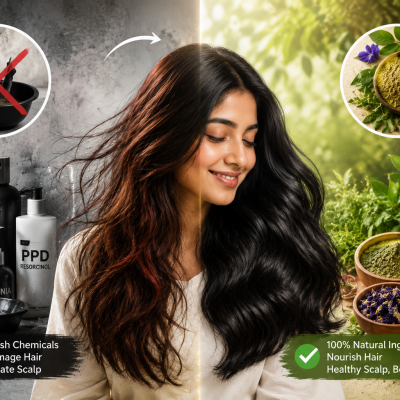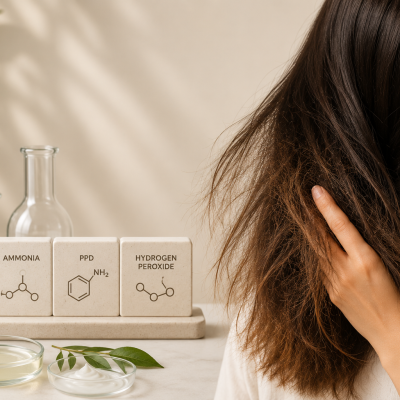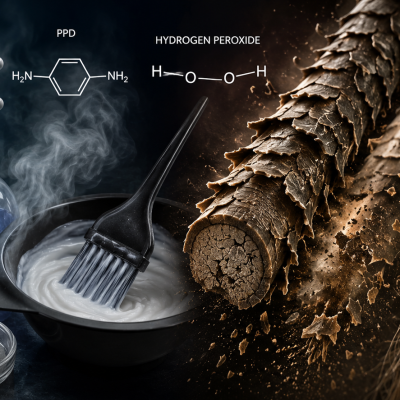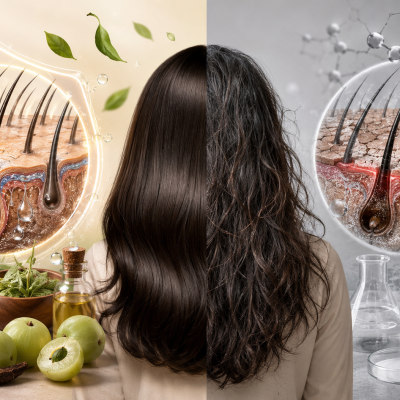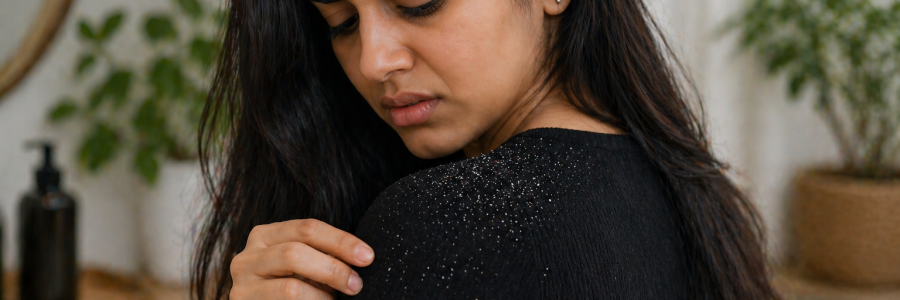
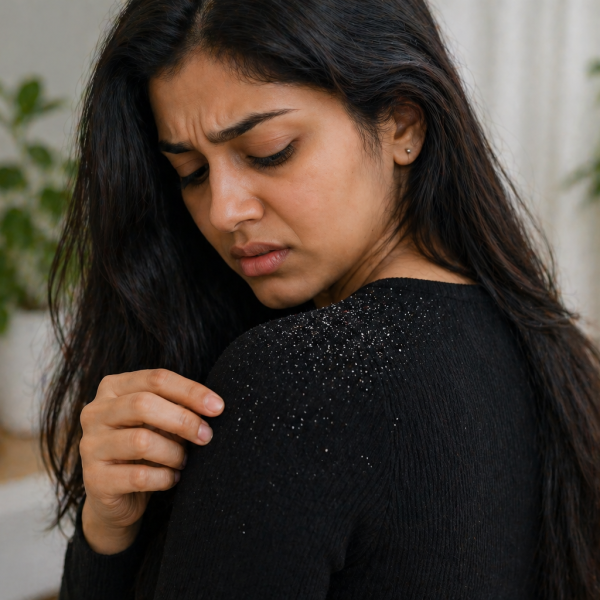
Dandruff that keeps coming back is rarely just a surface issue—it’s a sign of deeper imbalance in your scalp. From microbiome disruption and harsh shampoos to hormonal changes and product buildup, most routines unknowingly worsen the problem. In this guide, we break down the real causes of recurring dandruff and show you a smarter, more natural way to restore scalp balance and long-term relief.
Populations have been historically conditioned to treat visible flakes as debris to be scrubbed away with increasing physical and chemical force, yet the cycle of recurrence persists globally, affecting up to half of the adult population (Patel et al., 2024; Pingili et al., 2016). Frequent use of harsh anti-dandruff shampoos can trigger what’s known as the “strip-and-rebound” effect (Gavazzoni Dias et al., 2014; Chen et al., 2023). Strong surfactants remove dirt and microbes—but also strip the scalp’s natural lipid barrier, increasing moisture loss (TEWL) (Gavazzoni Dias et al., 2014; Kanyama et al., 2025).
In response, the scalp produces excess oil, which feeds dandruff-causing microbes and worsens inflammation (Chen et al., 2023; Rhimi et al., 2020).
Let's Discuss
Reason 1: Scalp Microbiome Imbalance
Your scalp naturally has good bacteria and fungi. These microbes maintain scalp balance by modulating local inflammatory responses and providing a competitive barrier against opportunistic pathogenic colonization (Borda et al., 2015). Read More.
When the natural balance of your scalp is disturbed, a yeast called Malassezia begins to overgrow. This yeast feeds on the oil (sebum) your scalp naturally produces. As it breaks down this oil, it creates a by-product called oleic acid—and this is where the real problem begins. Oleic acid penetrates the scalp, irritates the surface, and weakens its protective barrier. In response, your body triggers inflammation. As a result, your skin cells start growing and shedding much faster than normal. Instead of following the usual 28-day cycle, this process speeds up significantly.
The dead skin cells don’t shed smoothly; instead, they stick together and appear as visible white flakes—what we commonly recognize as dandruff. (DeAngelis et al., 2005; Borda et al., 2015)
Reason 2: The Dry vs Oily Scalp Confusion
Most people believe dandruff only happens when the scalp is oily, but that’s not entirely true. In reality, dandruff is a result of imbalance—your scalp can be either too oily or too dry, and both conditions can lead to flaking. Your scalp naturally produces oil (sebum), which plays an important role in protecting the skin, maintaining moisture, and supporting a healthy environment. However, when this balance is disturbed, problems begin (Chen et al., 2023; Rhimi et al., 2020).
If the scalp becomes too oily, it creates excess oil that a yeast called Malassezia feeds on, producing substances that irritate the skin and trigger flakes. On the other hand, if the scalp becomes too dry—often due to harsh shampoos or over-cleansing—it loses its protective barrier, leading to sensitivity and tiny invisible cracks that allow irritation to occur more easily. In both cases, the root issue is not oil or dryness alone, but the scalp’s inability to maintain its natural balance (Kanyama et al., 2025; Chen et al., 2023). Learn More.
👉Dandruff is not caused by dryness or oil alone—it is a microbiome imbalance where the scalp environment allows irritation-causing microbes to dominate (Borda et al., 2015).
.
Join the Journey Back to Natural Hair Care
We are building more than just products—we are building a community
that believes in thoughtful, effective, and responsible hair care.
Reason 3: Hormonal Changes (30s–50s Women)
Persistent dandruff in women between 30 and 50 is often linked to internal hormonal changes happening in the body. During this phase (perimenopause and menopause), estrogen levels start to decline, which affects the skin and scalp (Hall et al., 2005).
As a result, the scalp becomes thinner, drier, and more sensitive, making it less effective at protecting itself from irritation and external factors. At the same time, these hormonal shifts can also disturb how your scalp produces oil—sometimes making it too little (leading to dryness) or altering its quality in a way that encourages the growth of yeast like Malassezia.
This combination of a weaker scalp barrier and imbalanced oil creates the perfect environment for ongoing irritation, itching, and flakes (Hall et al., 2005; Stevenson et al., 2007). When this already sensitive scalp is exposed to harsh, chemical-based products, the problem can worsen further, increasing the chances of long-term scalp inflammation and recurring dandruff.
👉Repeated use of harsh shampoos can worsen dandruff by damaging the scalp barrier, triggering a cycle of dryness, oil rebound, and recurring flakes (Gavazzoni Dias et al., 2014; Chen et al., 2023).
Reason 4: Lifestyle & Product Build-Up
Your scalp doesn’t just react to what’s happening inside your body—it’s also heavily affected by your daily habits and environment.
- Product Buildup: Many shampoos and conditioners contain silicones and synthetic ingredients that buildup over time, forming a layer on the scalp. This can block hair follicles and affect healthy hair growth.
- Blocked Scalp Environment: This buildup mixes with oil and dead skin, creating a congested scalp where new hair struggles to grow properly. It also suppresses beneficial aerobic bacteria and favors the formation of thick pathogenic bacterial biofilms, frequently involving Staphylococcus aureus, which triggers inflammation and restrict the emergence of new hair strands (Zouboulis et al., 2020; Matard et al., 2013).
- Harsh Chemicals: Ingredients like artificial fragrances and preservatives can damage the scalp’s natural protective layer, making it sensitive and prone to irritation (Gavazzoni Dias et al., 2014).
- Stress Impact: High stress increases cortisol levels, which can disturb oil production and worsen scalp imbalance.
- Diet Influence: Diets high in sugar and processed foods can disrupt scalp health and encourage the growth of unwanted microbes (Wei et al., 2020; Chen et al., 2023).
- Overall Effect: Together, these factors create an unhealthy scalp environment, leading to problems like dandruff, irritation, and increased hair fall. Read More.
Conclusion
Dandruff is not just about flakes—it’s a signal that your scalp is out of balance. As we’ve seen, the real causes go much deeper: microbial imbalance, disruption of the scalp barrier, hormonal shifts, and everyday lifestyle habits that quietly damage your scalp over time. When we try to “fix” dandruff with stronger shampoos or frequent washing, we often worsen the problem by triggering the same strip-and-rebound cycle that keeps flakes coming back.
The real shift happens when you stop treating dandruff as a surface issue and start caring for your scalp as a living ecosystem. A gentle, consistent, and non-stripping routine allows your scalp to heal, rebalance, and function the way it naturally should.
This is exactly the philosophy behind Fusion of Herbs. By combining time-tested botanicals like Amla, Reetha, Shikakai, Neem, Aloe Vera, Methidana, and Curry Leaves in a clean, powder-based format, it supports your scalp without harsh chemicals or buildup. It cleans effectively while respecting your scalp’s natural oils—helping break the dandruff cycle at its root.
Sometimes, lasting results don’t come from doing more—but from choosing better and simplifying your routine.
References
1. Borda, L.J. and Wikramanayake, T.C. (2015) ‘Seborrheic dermatitis and dandruff: a comprehensive review’, Journal of Clinical and Investigative Dermatology, 3(2).
Available at: https://www.ncbi.nlm.nih.gov/pmc/articles/PMC4852869/
2. Chen, Y. et al. (2023) ‘Sebum, scalp microbiome, and inflammatory responses in dandruff pathogenesis’, International Journal of Molecular Sciences.
Available at: https://www.mdpi.com/1422-0067/24/5/4827
3. DeAngelis, Y.M. et al. (2005) ‘Isolation and expression of a Malassezia globosa lipase gene, LIP1’, Journal of Investigative Dermatology, 125(3), pp. 475–482.
Available at: https://pubmed.ncbi.nlm.nih.gov/16117790/
4. Gavazzoni Dias, M.F.R. (2014) ‘Hair cosmetics: an overview’, International Journal of Trichology, 6(1), pp. 2–15.
Available at: https://www.ncbi.nlm.nih.gov/pmc/articles/PMC3927171/
5. Hall, G. et al. (2005) ‘Skin changes during menopause’, Maturitas, 51(3), pp. 249–255. Available at: https://pubmed.ncbi.nlm.nih.gov/15913876/
6. Kanyama, N. et al. (2025) ‘Surfactant-containing detergents: Impacts on dermal health’, Colloids and Surfaces B: Biointerfaces.
Available at: https://www.sciencedirect.com/science/article/abs/pii/S0927776525005338
7. Matard, B. et al. (2013) ‘Hair care products and their impact on scalp health’, Clinical, Cosmetic and Investigational Dermatology, 6, pp. 281–292.
Available at: https://www.ncbi.nlm.nih.gov/pmc/articles/PMC3944653/
8. Patel, S. et al. (2024) ‘Traditional herbal ingredients and their therapeutic properties for scalp health’, Journal of Ethnopharmacology.
Available at: https://www.academia.edu/127508464/Ethnopharmacology_and_hair_Indian_perspectives
9. Pingili, R.B. et al. (2016) ‘Evaluation of herbal extracts for antidandruff activity’, International Journal of Pharmaceutical Sciences Review and Research.
Available at: https://www.researchgate.net/publication/301696202
10. Rhimi, W. et al. (2020) ‘Sebum lipids and their role in skin and scalp disorders’, Lipids in Health and Disease, 19(1).
Available at: https://lipidworld.biomedcentral.com/articles/10.1186/s12944-020-01361-9
11. Stevenson, S. and Thornton, J. (2007) ‘Effect of hormones on skin and hair’, Climacteric, 10(4), pp. 289–297.
Available at: https://pubmed.ncbi.nlm.nih.gov/17653960/
12. Wei, Y. et al. (2020) ‘Diet, microbiome, and inflammatory skin conditions’, Frontiers in Microbiology, 11.
Available at: https://www.frontiersin.org/articles/10.3389/fmicb.2020.
13. Zouboulis, C.C. et al. (2020) ‘Sebaceous gland function and disorders’, Dermato-Endocrinology, 12(1).
Available at: https://www.ncbi.nlm.nih.gov/pmc/articles/PMC