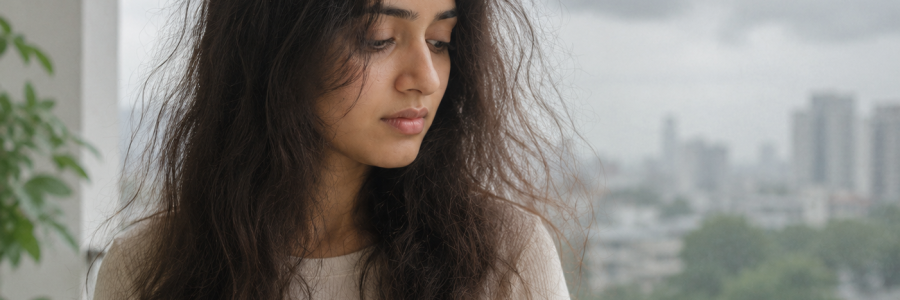

High humidity (especially during monsoon or in humid climates) can seriously affect both your hair and scalp. When there is too much moisture in the air, your hair repeatedly absorbs and loses water, causing it to swell and shrink again and again. Over time, this weakens the outer layer (cuticle) and leads to damage, frizz, and breakage (Breakspear et al., 2019; Wortmann et al., 2013). At the same time, your scalp environment also gets disturbed—excess humidity can create imbalance, allowing harmful microbes to grow, which can lead to irritation, inflammation, and even increased hair fall (Tu et al., 2018; Devare & Vaidya, 2025). This is why simply using cosmetic products to control frizz is not enough, and in some cases, these synthetic products can even worsen the problem over time (Cheng et al., 2020; Kumari et al., 2025).
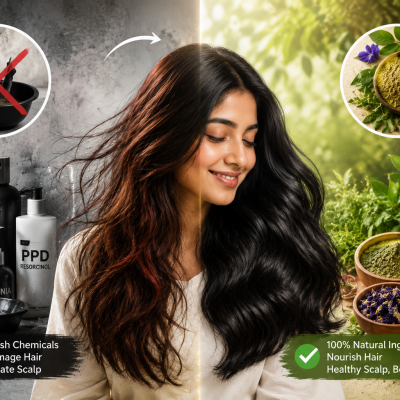
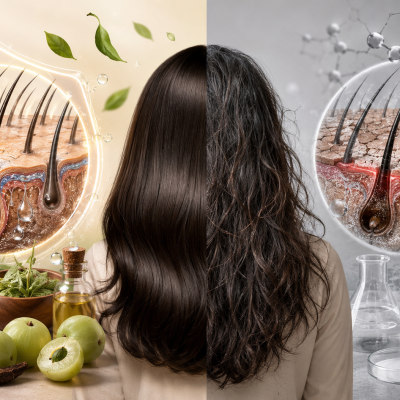
Today, hair care is slowly shifting towards more natural and biology-friendly solutions instead of synthetic coatings that only give temporary results (Kumari et al., 2025; Penkar et al., 2023). Traditional ingredients like Amla (Phyllanthus emblica), Reetha (Sapindus mukorossi), and Shikakai (Acacia concinna) work with your hair and scalp, not against them. They help clean gently, maintain balance, and support the natural strength of hair (Devare & Vaidya, 2025; Pradhan et al., 2017). By understanding how humidity affects hair and using the right natural care approach, we can move beyond short-term fixes and actually protect hair health in the long run—this is the idea behind a “Humidity Protocol,” which focuses on strengthening hair and scalp so they stay healthy in any environment.
Let's Discuss
1. 3 Reasons How Humidity Weakens Hair Over Time
To manage hair damage caused by humidity, it’s important to understand what actually happens to your hair in moist environments. Human hair naturally absorbs and releases moisture from the air to stay balanced—this is a normal process (Wortmann et al., 2013). However, when the air is very humid, this process goes out of control. Your hair keeps absorbing too much moisture and then losing it repeatedly. This constant swelling and shrinking puts stress on the hair structure and weakens it over time. This condition is known as hygral fatigue, and it leads to problems like frizz, rough texture, and breakage (Wortmann et al., 2013).
a. How Humidity Causes Frizz and Damages Hair
Frizz is not just a surface problem—it actually starts deep inside your hair. Hair is made of a protein called keratin, which is held together by different types of bonds that give it strength, shape, and smoothness (Breakspear et al., 2019; Wortmann et al., 2013). When there is high humidity, moisture from the air enters the hair shaft and disturbs these bonds, especially the weaker hydrogen bonds that help maintain hair structure (Breakspear et al., 2019). As water molecules attach themselves inside the hair, they cause the strands to bend and lose their natural shape, which is why hair starts looking frizzy and unmanageable (Breakspear et al., 2019).
At the same time, this extra moisture makes the inner part of the hair swell. This creates pressure on the outer layer of the hair, called the cuticle, causing it to lift instead of staying smooth and flat (Breakspear et al., 2019; Wortmann et al., 2013). When this swelling and drying cycle happens repeatedly—like moving between humid outdoors and dry indoor environments—the cuticle gets damaged and loses its ability to stay flat. As a result, hair becomes rough, porous, weak, and more prone to breakage (Wortmann et al., 2013). This damage becomes even worse when humidity is combined with sun exposure, as it can further weaken the hair’s protein structure over time (Wang et al., 2026).
b. How Friction and Heat Make Hair Damage Worse
When the outer layer of your hair (cuticle) gets lifted due to humidity, your hair strands start rubbing against each other more. This increases friction, making everyday actions like combing, tying hair, or even towel drying much more damaging (Wortmann et al., 2013). The rough, lifted edges of the hair can get caught easily, leading to breakage. This is why you may notice more short, broken strands, tangles, and uneven hair length (Wortmann et al., 2013).
At the same time, hair also loses its natural lipids (oils), which are important for maintaining moisture balance and strength. These lipids act like a protective barrier inside the hair, but when they are reduced, hair becomes more sensitive to humidity and damage (Wortmann et al., 2013). Without enough lipids, hair cannot properly control moisture, which weakens its structure over time. Heat styling, like blow-drying, makes things worse by rapidly drying out the hair and causing internal stress, which can lead to cracks and further damage to the cuticle (Wortmann et al., 2013).
c. How Humidity Affects Scalp Balance and Hair Fall
Hair problems in humidity are not just about frizz—they also start at the scalp level. Your scalp has its own natural environment with oil glands, sweat, and a mix of good microbes like Staphylococcus, Cutibacterium, and Malassezia (Tu et al., 2018). When everything is balanced, these microbes actually help keep your scalp healthy, maintain moisture, and protect it from damage (Tu et al., 2018). Read More.
However, in humid conditions, this balance can get disturbed. Excess moisture and sweat can create an environment where harmful microbes grow faster, leading to irritation and scalp issues. This imbalance, called microbial dysbiosis, can weaken the scalp and affect hair roots, which may result in increased hair fall along with frizz (Tu et al., 2018).
Over time, this constant inflammation puts stress on the hair roots. It weakens the grip of the hair follicle and can even disturb the natural hair growth cycle—causing hair to enter the shedding phase earlier than it should (Devare & Vaidya, 2025). That’s why during humid seasons, you may notice more hair fall, thinning, and increased strands on your pillow or in the shower.
2. Why Synthetic Hair Products Often Make Things Worse
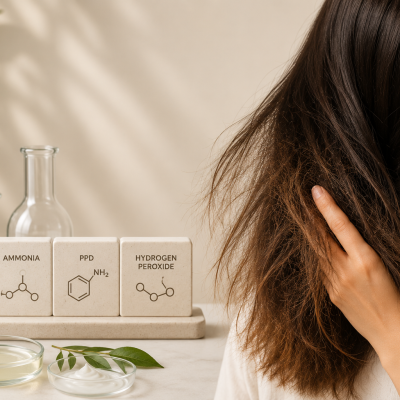
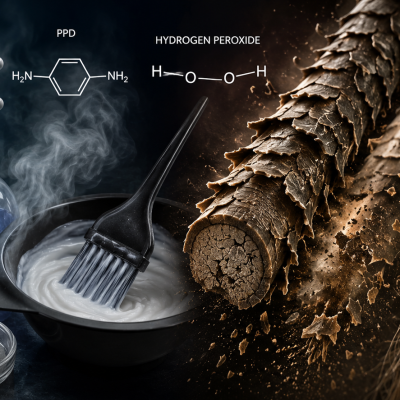
Many modern hair products try to fix problems like frizz, dryness, and dullness using strong chemical ingredients. While they may give temporary smoothness or shine, they usually don’t solve the real issue—and can actually make things worse over time (Cheng et al., 2020).
Ingredients like sulfates and silicones can damage the scalp’s natural protective layer, known as the acid mantle, which is important for maintaining moisture and balance.
When this natural layer is stripped away, hair becomes dry, rough, and more porous, making it more prone to damage and frizz, especially in humid conditions (Cheng et al., 2020). At the same time, the scalp reacts by producing extra oil to compensate for the dryness. This leads to an oily scalp soon after washing, which creates the perfect environment for dandruff-causing fungi like Malassezia to grow (Tu et al., 2018; Cheng et al., 2020).
So while sulfates may give a quick clean feeling, they often disturb the scalp balance and contribute to long-term hair and scalp issues.
Silicones can also build up on the scalp, clogging hair follicles and trapping oil and dead skin. This can lead to irritation, dandruff, and even increased hair fall (Cheng et al., 2020; Kumari et al., 2025). Additionally, these ingredients do not break down easily in the environment, raising long-term environmental concerns (Kumari et al., 2025). Read More.
👉 Many modern hair products give temporary smoothness but don’t fix the root problem and can damage the scalp’s natural balance over time, making symptoms even worse during humid environment(Cheng et al., 2020).
Join the Journey Back to Natural Hair Care
We are building more than just products—we are building a community
that believes in thoughtful, effective, and responsible hair care.
3. The Transition Phase: Why Hair Feels Different at First
When you switch from chemical-based, silicone-heavy products to natural, plant-based hair care, your hair and scalp go through an adjustment phase (Penkar et al., 2023). In the beginning, your hair may feel frizzy, heavy, waxy, or difficult to manage—especially in humid weather (Penkar et al., 2023).
This is often misunderstood as the product not working, but in reality, it’s a natural detox process. Earlier, silicones and chemicals were coating your hair and hiding the actual condition. Now, without that layer, your real hair texture is being “revealed” before it can truly “repair” itself (Penkar et al., 2023). This phase is called “Hair Clarity”—where you finally see the actual state of your hair.
Over time, as buildup clears and the scalp regains its natural balance, hair gradually becomes healthier, stronger, and more manageable from within.
a. Scalp Reset: Balancing Oil & Microbiome
When you switch to gentle, natural hair care, your scalp also goes through an adjustment phase. After years of using harsh shampoos, your scalp gets used to overproducing oil to compensate for constant dryness (Penkar et al., 2023).
As you continue using mild, non-stripping herbal cleansers, your scalp slowly realizes it no longer needs to overproduce oil. Gradually, oil production comes back to a normal, balanced level (Penkar et al., 2023).
Over time, this also helps restore the natural scalp microbiome. Excess oil reduces, dandruff-causing microbes like Malassezia decrease, and your hair starts feeling lighter, healthier, and more naturally manageable (Penkar et al., 2023).
b. Natural Herbal Solutions for Healthy Hair
To manage humidity and improve hair health without using heavy chemicals, natural herbal ingredients can be very effective. Traditional Indian herbs work in harmony with the body, helping to cleanse, nourish, and protect the hair and scalp in a gentle way (Pradhan et al., 2017).
A well-designed herbal blend—like a “Fusion of Herbs” formula—uses the natural properties of these ingredients to clean the scalp, condition the hair, and support healthy hair growth, without disturbing the scalp’s natural balance (Devare & Vaidya, 2025; Kumari et al., 2025).
👉 Unlike many commercial products, these plant-based solutions do not rely on harsh chemicals or coatings. Instead, they work with your body’s natural processes, helping restore strength, smoothness, and overall hair health over time (Pradhan et al., 2017; Kumari et al., 2025).
4. Rise of Ayurvedic + Scientific Hair Care
In India, there is a strong and growing demand for hair care products that combine traditional Ayurveda with modern science (Devare & Vaidya, 2025). People, especially in urban areas, are now looking for solutions that use trusted ingredients like Amla, Bhringraj, Shikakai, and Neem, but also have scientific backing and proven results (Devare & Vaidya, 2025; Chakrabarty, 2026). Instead of generic “anti-hair fall” shampoos, consumers want targeted solutions for problems caused by stress, diet, and environmental damage (Devare & Vaidya, 2025; Chakrabarty, 2026).
At the same time, local conditions like hard water, pollution, and high humidity—especially in regions like Delhi NCR and Gurgaon—are shaping what people need from their products (Budhavant et al., 2011; Chakrabarty, 2026). Today’s consumers are more aware—they read labels and avoid harmful ingredients like sulfates, parabens, and synthetic chemicals (Kumari et al., 2025; Cheng et al., 2020; Chakrabarty, 2026). Instead, they prefer natural, effective, and safe formulations that support both long-term hair health and environmental sustainability (Kumari et al., 2025; Chakrabarty, 2026).
5. Conclusion - Healthy Hair in Tough Environments
Taking care of your hair in conditions like high humidity, heat, and pollution requires a different approach than using harsh, chemical-based products. Problems like hair damage from constant moisture (hygral fatigue), dandruff caused by Malassezia overgrowth, and the effects of polluted rainwater create a very stressful environment for both hair and scalp. In such situations, using strong sulfates and silicone-based products can actually make things worse by damaging the hair structure, clogging the scalp, and increasing inflammation.
A better approach is to use natural, plant-based solutions that work with your body. Ingredients like Amla (rich in antioxidants), Reetha and Shikakai (gentle natural cleansers), and Methi and Curry leaves (which support hair growth) help restore balance in a natural way. Read More. Following the right method, like “Mix-Shake-Apply,” ensures effective and gentle cleansing without harming the scalp (Pradhan et al., 2017; Wang et al., 2026). Over time, this approach helps rebuild the scalp’s natural balance and strength. In the end, long-term hair health comes not from harsh treatments, but from supporting your scalp with the right natural care backed by science.
6. References
- Breakspear, S., Noecker, B. and Popescu, C., 2019. Relevance and Evaluation of Hydrogen and Disulfide Bond Contribution to the Mechanics of Hard α-Keratin Fibers. Journal of Physical Chemistry B, 123(21), pp.4505-4511. Available at: https://pubmed.ncbi.nlm.nih.gov/31067053/.
- Budhavant, K.B., Rao, P.S.P., Safai, P.D. and Ali, K., 2011. Chemistry of Monsoon Rainwater. Aerosol and Air Quality Research. Available at: https://aaqr.org/articles/aaqr-22-01-ssea-0019.
- Chakrabarty, S., 2026. Key Trends to Watch in the Professional Hair Care Market in India. Kline & Company. Available at: https://klinegroup.com/beauty-and-wellbeing/professional-hair-care/professional-hair-care-market-in-india-trends-growth/.
- Cheng, W., Kai, D., Loh, X.J. and He, C., 2020. Silicone copolymers for healthcare and personal care applications. In Silicon containing hybrid copolymers (pp. 1-20). Wiley-VCH. Available at: https://pmc.ncbi.nlm.nih.gov/articles/PMC10298615/.
- Devare, M.S.A. and Vaidya, M.S.S., 2025. Anti-Dandruff Herbal Shampoo Using Amla, Reetha, and Shikakai: A Comprehensive Review. International Journal of Innovative Research in Technology, 12(6), pp.3991–3998. Available at: https://ijirt.org/article?manuscript=187342.
- Kumari, N., Ahmed, M.S. and Ibrahim, M., 2025. A Comprehensive Review On Herbal Shampoo For Dandruff Scalp. International Journal of Pharmaceuticals and Health care Research, 13(SPL 1), pp.121-130. Available at: https://ijphr.com/index.php/ijphr/article/download/144/117/257.
- Penkar, G.M., Salkar, M.R., Chavan, P.S. et al., 2023. An Overview on Indian Herbs in Hair Care Therapy. Research Journal of Pharmacognosy and Phytochemistry, 15(2), pp.161-166. Available at: https://rjpponline.org/HTMLPaper.aspx?Journal=Research%20Journal%20of%20Pharmacognosy%20and%20Phytochemistry;PID=2023-15-2-11.
- Pradhan, A. et al., 2017. Quest for an eco-friendly alternative surfactant: Surface and foam characteristics of natural surfactants. Journal of Cleaner Production, 150, pp.127–134. Available at: https://www.mdpi.com/2413-4155/3/4/44.
- Rani, et al., 2026. Formulation and Evaluation of Herbal Hair Oil. World Journal of Pharmaceutical Research, 15(7), pp.1443. Available at: https://wjpr.s3.ap-south-1.amazonaws.com/article_issue/4d0e9aff86e047d0285f5c18bdfa24d2.pdf.
- Tu, W.T., Chin, S.Y., Chou, C.L. et al., 2018. Clinical differences in pediatric and adult Malassezia folliculitis. Journal of the American Academy of Dermatology, 81, pp.278–280. Available at: https://pmc.ncbi.nlm.nih.gov/articles/PMC7098993/.
- Wang, D., Gao, P., Zhang, S. et al., 2026. Tailoring asymmetric pseudo-Gemini surfactants for green firefighting foams. Surfaces and Interfaces, 80, 108333. Available at: https://pubs.acs.org/doi/10.1021/acsomega.1c06766.
- Wortmann, F.J., Metten, D., Schlingmann, M., Bayersdoerfer, R. and Reineking, M., 2013. Dynamic humidity curl retention as a method for the evaluation of hair fixative components. HairS’13, 18th International Hair-Science Symposium. Available at: https://research.manchester.ac.uk/en/publications/dynamic-humidity-curl-retention-as-a-method-for-the-evaluation-of/.