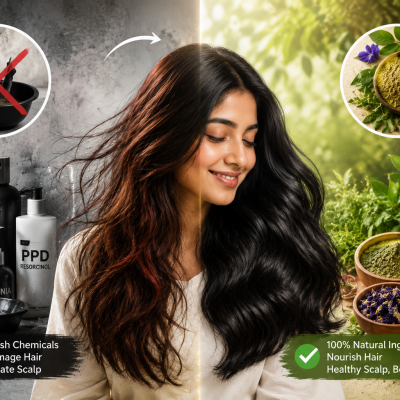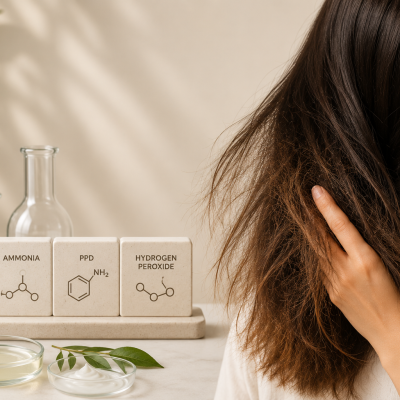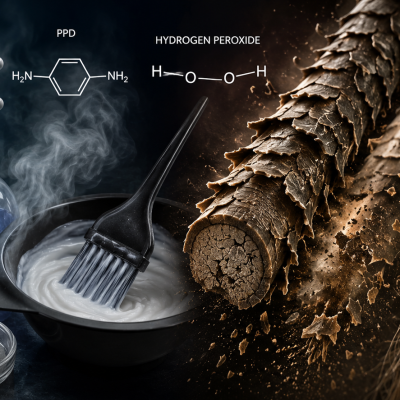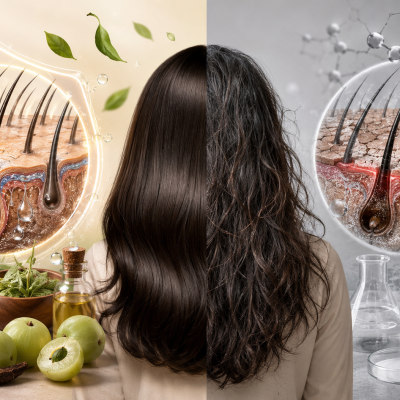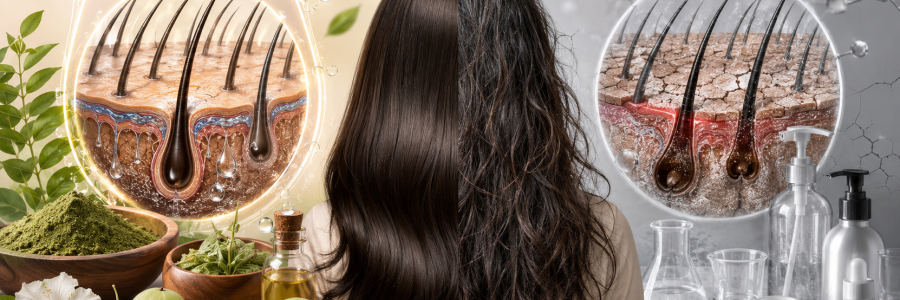
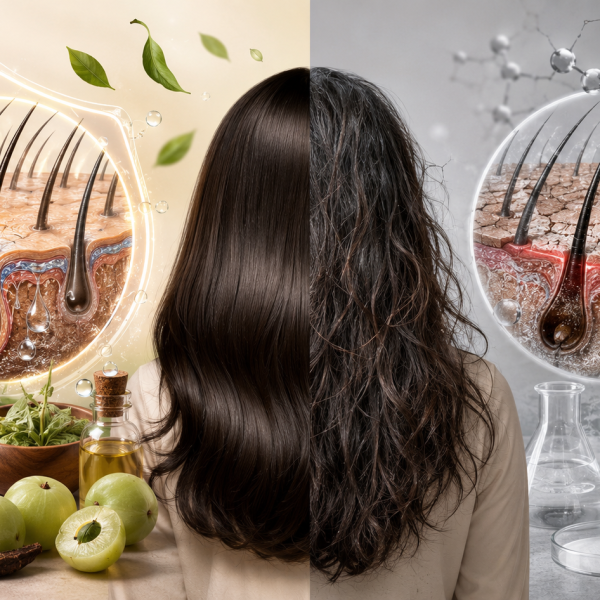
Modern hair science no longer views the scalp as just the skin beneath the hair. Instead, it is recognized as a living, active ecosystem that plays a critical role in maintaining healthy hair growth, scalp hydration, and overall scalp balance. A major trend in the beauty and personal care industry, known as the “skin-ification” of the scalp, is changing how we think about hair care (The Hair Society, 2022).
This approach treats the scalp with the same importance as facial skin, focusing on key factors such as scalp hydration, microbiome balance, and healthy oil (sebum) production. These factors are now considered essential for maintaining a healthy scalp and supporting strong, healthy, and resilient hair over the long term (The Hair Society, 2022).
Let's Discuss
- 1. Why Scalp Health Matters More Than Ever
- 2. Understanding the Hair Follicle and Scalp Barrier
- 3. Can Some Hair Care Ingredients Make Your Scalp Dry?
- 4. How Some Synthetic Ingredients Can Affect the Scalp Barrier
- 5. Natural Herbal Cleansers: The Power of Herbs
- 6. Conclusion: Why Herbal Approach Supports Long-Term Scalp Health and Hydration
- 7. References
1. Why Scalp Health Matters More Than Ever
Just as healthy soil is necessary for plants to grow and thrive, a well-balanced and properly hydrated scalp creates the ideal environment for healthy hair growth and stronger hair strands. Maintaining scalp hydration is therefore essential for supporting long-term scalp and hair health (The Hair Society, 2022).
The scalp contains a high number of hair follicles, active oil and sweat glands, a diverse microbiome, and unique biological processes that influence hair growth, scalp hydration, and overall scalp health (The Hair Society, 2022; Townsend et al., 2023).
The scalp provides the environment in which hair follicles function and grow. The health of these follicles depends on many factors, including the surrounding tissue, growth signals, immune responses, adequate scalp hydration, and overall scalp condition (Ford et al., 2024).
When the scalp is affected by harsh chemicals, environmental stress, inflammation, or internal health imbalances, the hair growth cycle can become disrupted. This may lead to weaker hair follicles, thinner hair, damage to the hair shaft, reduced scalp hydration, and increased hair fall over time (Ford et al., 2024; Sang et al., 2023).
For many years, the hair care industry focused mainly on making hair look smooth, shiny, and voluminous. This was often achieved using synthetic ingredients such as silicones and polymers that coated the hair strand and provided temporary cosmetic benefits (The Hair Society, 2022). However, these products generally improved appearance without addressing the underlying health of the scalp, including the importance of maintaining proper scalp hydration.
Today, the focus is shifting from cosmetic hair care to biological hair care (The Hair Society, 2022). More consumers now understand that healthy hair begins with a healthy scalp because the hair follicle is located within the skin. The condition of the scalp, including its ability to maintain optimal scalp hydration, directly influences the strength, quality, and appearance of the hair that grows from it (The Hair Society, 2022).
As a result, ingredients commonly used in skincare—such as niacinamide, peptides, salicylic acid, and hyaluronic acid—are increasingly being included in scalp care products to support scalp health and scalp hydration at the source (The Hair Society, 2022).
However, this rapid shift has created a new challenge for consumers. While synthetic active ingredients can deliver targeted and often faster results, their excessive or improper use may disrupt the scalp’s natural protective barrier. As a result, many people are now looking for holistic, long-term solutions that support scalp hydration and overall scalp health without causing dependence, increasing Transepidermal Water Loss (TEWL), or disturbing the skin’s natural balance (The Hair Society, 2022). Understanding how the scalp maintains hydration, and how natural herbal ingredients and synthetic chemicals affect this process, has therefore become an important area of interest in modern hair and scalp care. Read More.
2. Understanding the Hair Follicle and Scalp Barrier
The hair follicle is a highly active mini-organ located within the deeper layers of the skin. It is responsible for producing and growing hair throughout life (Ford et al., 2024).
The hair follicle contains several specialized structures. One important area is the bulge region, which stores hair follicle stem cells. These stem cells help regenerate the follicle and support new hair growth during each growth cycle (Ford et al., 2024).
At the base of the follicle is the dermal papilla, a cluster of cells supplied by a rich network of blood vessels. The dermal papilla plays a key role in controlling hair growth by producing signals and growth factors that influence hair thickness, strength, and the length of the active growth phase (anagen) (Ford et al., 2024).
The health of these structures depends greatly on the condition of the surrounding scalp. The scalp not only supports the hair follicle but also acts as a protective barrier against pollutants, microbes, and excessive moisture loss (Ford et al., 2024).
This protective barrier is mainly formed by the stratum corneum, the outermost layer of the skin. It is often described as a “brick and mortar” structure, where skin cells called corneocytes act as the bricks and a layer of lipids acts as the mortar that holds them together (Ford et al., 2024).
These lipids are made up of ceramides, cholesterol, and fatty acids and are produced within the deeper layers of the skin (Ford et al., 2024). In a healthy scalp, they are tightly packed together, forming a strong barrier that helps retain moisture and protects the scalp from external irritants and chemicals (Ford et al., 2024).
👉 To understand how chemical and herbal hair care products affect long-term hair health, it is important to first understand the structure of the hair follicle and the scalp.
Join the Journey Back to Natural Hair Care
We are building more than just products—we are building a community
that believes in thoughtful, effective, and responsible hair care.
3. Can Some Hair Care Ingredients Make Your Scalp Dry?
To improve scalp hydration, many shampoos, conditioners, and scalp serums contain Hyaluronic Acid (HA). HA is a naturally occurring substance in the body that helps regulate moisture and water balance (Regimen Lab, 2021). It is widely used in cosmetic products because it can attract and hold large amounts of water, reportedly up to 1,000 times its own weight (Regimen Lab, 2021).
When applied to the scalp, HA-based products often provide an immediate feeling of hydration, cooling, and comfort (Regimen Lab, 2021). However, the way HA works depends greatly on the surrounding environment, and in some cases, it may not provide lasting hydration (Regimen Lab, 2021).
Hyaluronic acid cannot create water on its own—it must draw moisture from somewhere. Ideally, it attracts water from the air, but this works best when the surrounding humidity is very high, generally above 70% (Regimen Lab, 2021).
In many modern environments, such as air-conditioned offices, heated indoor spaces, or dry weather conditions, there is often not enough moisture in the air (Regimen Lab, 2021). In these situations, HA may pull water from the deeper layers of the scalp instead, bringing it to the surface (Regimen Lab, 2021).
If this moisture is not sealed in with protective ingredients such as plant oils, squalane, or ceramides, it can quickly evaporate into the air (Regimen Lab, 2021). This process increases Transepidermal Water Loss (TEWL), meaning the scalp loses more water than it should (Regimen Lab, 2021).
As a result, the scalp may feel hydrated immediately after application but become dry, tight, or itchy later on (Regimen Lab, 2021). This can lead people to reapply the product frequently, creating a cycle of temporary relief followed by recurring dryness and long term dependency on Hyaluronic Acid.
👉 Hyaluronic Acid may offer quick hydration, but in dry conditions it can contribute to moisture loss if not paired with protective ingredients, potentially leading to recurring scalp dryness (Regimen Lab, 2021).
4. How Some Synthetic Ingredients Can Affect the Scalp Barrier
The challenges associated with synthetic hydrating ingredients go beyond temporary dryness. Research suggests that some forms of synthetic Hyaluronic Acid (HA) may also affect the structure of the scalp’s natural protective barrier (Regimen Lab, 2021).
As discussed earlier, the outer layer of the scalp relies on a strong “brick and mortar” structure. The skin cells act as the bricks, while lipids such as ceramides, cholesterol, and fatty acids form the mortar that holds everything together (Regimen Lab, 2021). This tightly packed structure helps prevent excessive water loss and protects the scalp from external irritants (Regimen Lab, 2021).
Not all Hyaluronic Acid is the same. It is available in different molecular sizes. High Molecular Weight HA (HMW-HA) remains on the skin’s surface and forms a protective film, while Mid-Molecular Weight (MMW-HA) and Low-Molecular Weight HA (LMW-HA) are small enough to penetrate deeper into the skin (Regimen Lab, 2021).
Research has shown that some mid-sized HA molecules may temporarily disturb the tightly packed lipid structure of the skin barrier (Regimen Lab, 2021). This can allow water to move quickly into the upper layers of the scalp, creating the immediate feeling of hydration and plumpness that many users enjoy (Regimen Lab, 2021). However, this temporary change may weaken the barrier’s ability to retain moisture over time, potentially leading to increased Transepidermal Water Loss (TEWL) (Regimen Lab, 2021).
Studies also suggest that very small HA fragments may interact with natural skin proteins and alter their structure (Regimen Lab, 2021). In addition, extremely small HA fragments can sometimes be recognized by the body as signals of tissue damage (Regimen Lab, 2021).
These findings highlight the importance of maintaining the scalp’s natural barrier rather than focusing only on immediate hydration. Long-term scalp health depends not only on adding moisture but also on preserving the structure and function of the scalp’s protective lipid barrier.
When the scalp barrier becomes weakened over time, it can lead to dryness, sensitivity, and inflammation (Regimen Lab, 2021). This inflammation may also affect the hair follicles, potentially disrupting normal hair growth and contributing to hair thinning (Regimen Lab, 2021). For this reason, protecting and maintaining the scalp’s natural barrier is just as important as keeping it hydrated (Regimen Lab, 2021).
5. Natural Herbal Cleansers: The Power of Herbs
Reetha (Sapindus mukorossi) and Shikakai (Acacia concinna)
The key difference between herbal cleansers such as Reetha and Shikakai and synthetic detergents like SLS (Sodium Lauryl Sulfate) is how they clean the scalp (Sang et al., 2023) Read More. Research shows that saponins, the natural cleansing compounds found in Reetha and Shikakai, cleanse the scalp gently without damaging its natural protective barrier (Sang et al., 2023).
They do not disturb the deeper lipids that help maintain the scalp barrier. As a result, the scalp retains its natural moisture, reducing Transepidermal Water Loss (TEWL) and helping prevent the dryness and tightness (Sang et al., 2023; Matsagar et al., 2025).
From a pH perspective, Shikakai is also naturally suited to scalp health. It has a mildly acidic pH of around 4.5 to 5.5, which closely matches the scalp’s natural acid mantle (Sang et al., 2023). This helps maintain the scalp’s natural balance and keeps the hair cuticle smooth and flat (Sang et al., 2023).
Amla and Aloe Vera: Natural Protection and Scalp Care
Once the scalp has been cleansed without damaging its natural barrier, the next step is to maintain hydration and support healthy hair follicles. While some synthetic humectants, such as low-molecular-weight Hyaluronic Acid (HA), may affect the scalp barrier and trigger inflammation, many botanical ingredients provide hydration and nourishment in a gentler way.
Two of the most well-researched botanical ingredients for scalp and hair health are Phyllanthus emblica (Amla) and Aloe barbadensis (Aloe Vera). These ingredients help support scalp hydration, nourish the hair follicles, and promote overall scalp wellness without disrupting the scalp’s natural protective barrier.
While Amla helps support healthy hair growth, Aloe Vera (Aloe barbadensis) helps keep the scalp hydrated, soothed, and healthy. Together, they work in harmony to create a healthy environment for hair growth.
Unlike some synthetic humectants that depend heavily on environmental humidity, Aloe Vera helps retain moisture on the scalp in a gentler way (Gupta et al., 2025). When applied, it forms a light, breathable layer that helps reduce water loss from the scalp and provides long-lasting hydration (Gupta et al., 2025). This helps lower Transepidermal Water Loss (TEWL) and keeps the scalp comfortably moisturized (Gupta et al., 2025).
In addition, Aloe Vera has soothing and skin-supporting properties. It can help calm irritated scalps, support the repair of minor scalp damage, and reduce inflammation caused by itching, styling stress, or chemical treatments (Gupta et al., 2025). By helping restore the scalp’s natural barrier, Aloe Vera contributes to overall scalp comfort and long-term scalp health (Gupta et al., 2025).
6. Conclusion: Why Herbal Approach Supports Long-Term Scalp Health And Hydration
Modern hair care has increasingly adopted skincare-inspired ingredients and concepts, bringing greater attention to scalp health. While this has helped improve awareness, research suggests that some synthetic ingredients may not always support the scalp’s long-term biological needs.
For example, certain forms of Hyaluronic Acid (HA), especially low-molecular-weight HA, can provide a temporary feeling of hydration but may also increase Transepidermal Water Loss (TEWL) under certain environmental conditions and affect the scalp’s natural barrier function (Regimen Lab, 2021). Studies also suggest that very small HA fragments may trigger inflammatory responses that can negatively impact scalp health over time (Regimen Lab, 2021).
In contrast, many herbal ingredients work in harmony with the scalp’s natural biology. Traditional herbs such as Reetha (Sapindus mukorossi) and Shikakai (Acacia concinna) cleanse the scalp effectively without removing essential moisture or damaging the protective barrier (Sang et al., 2023). Their naturally acidic nature also helps maintain the scalp’s acid mantle and supports smoother, healthier-looking hair (Sang et al., 2023; Matsagar et al., 2025).
For hydration and scalp nourishment, ingredients such as Fenugreek (Trigonella foenum-graecum) and Aloe Vera (Aloe barbadensis) help retain moisture, reduce water loss, and support scalp comfort without disrupting the barrier (Gupta et al., 2025). Aloe Vera also helps soothe irritation and gently remove dead skin cells from the scalp (Gupta et al., 2025).
In addition, Amla (Phyllanthus emblica) has been shown to support healthy hair follicles and hair growth pathways, while Neem (Azadirachta indica) helps maintain a balanced scalp microbiome and supports scalp health (Gupta et al., 2025).
Overall, healthy hair starts with a healthy scalp. Rather than relying on harsh chemicals or temporary cosmetic effects, a well-formulated herbal approach provided by Fusion of Herbs focuses on protecting the scalp barrier, maintaining hydration, reducing inflammation, and supporting the scalp’s natural biological processes. By working with the body’s natural systems, herbal hair care can help create a healthier scalp environment and support stronger, more resilient hair over time.
7. References:
- Arise Cosmetic (2025) ‘Hair Care Trends in India’. Available at: https://arisecosmetic.com/hair-care-trends-in-india/
- Ben Abdennebi, A. et al. (2026) ‘Fenugreek as a Versatile Cosmetic Ingredient’, Cosmetics. Available at: https://www.mdpi.com/2079-9284/13/1/44
- Chylińska, N. and Maciejczyk, M. (2022) ‘Hyaluronic Acid in Skin Aging and Wound Healing’, MDPI. Available at: https://www.mdpi.com/2310-2861/11/4/281
- Ford, N.C. et al. (2024) ‘Hair follicles as multi-faceted regulators of skin barrier function’, bioRxiv. Available at: https://pmc.ncbi.nlm.nih.gov/articles/PMC11071379/
- Grand View Research (2024) ‘India Natural Hair Care Product Market Outlook’. Available at: https://www.grandviewresearch.com/horizon/outlook/natural-hair-care-product-market/india
- Gupta, P. et al. (2025) ‘Development and Assessment of a Herbal Hair Mask for Scalp and Hair Health’, World Journal of Pharmaceutical and Life Science. Available at: https://www.researchgate.net/publication/393341493_DEVELOPMENT_AND_ASSESSMENT_OF_A_HERBAL_HAIR_MASK_FOR_SCALP_AND_HAIR_HEALTH
- Matsagar, S.V. et al. (2025) ‘Eco-Friendly Herbal Paper Soap: Amla, Reetha and Shikakai Based Formulation and Evaluation’, International Journal for Research Trends and Innovation. Available at: https://www.ijrti.org/papers/IJRTI2505179.pdf
- Mordor Intelligence (2024) ‘India Hair Care and Styling Products Market’. Available at: https://www.mordorintelligence.com/industry-reports/india-hair-care-and-styling-products-market-industry
- Regimen Lab (2021) ‘Is HA all it’s cracked up to be’. Available at: https://regimenlab.ca/blogs/labnotes/is-ha-all-its-cracked-up-to-be
- Sang, S.H. et al. (2023) ‘Natural alternatives from your garden for hair care: Revisiting the benefits of tropical herbs’, Heliyon. Available at: https://pmc.ncbi.nlm.nih.gov/articles/PMC10685248/
- Small Wonder (2024) ‘Beyond the Bar: Why the Future of Sustainable Hair Care is Powder’. Available at: https://smallwonder.world/blogs/hair-today-here-tomorrow/beyond-the-bar-why-the-future-of-sustainable-hair-care-is-powder-not-solid
- The Hair Society (2022) ‘The Skinification of Hair’. Available at: https://www.thehairsociety.org/the-skinification-of-hair/
- Townsend, N. et al. (2023) ‘New Topicals to Support a Healthy Scalp While Preserving the Microbiome’, Journal of Clinical and Aesthetic Dermatology. Available at: https://jcadonline.com/new-topicals-to-support-a-healthy-scalp-while-preserving-the-microbiome-a-report-of-clinical-and-in-vitro-studies/
- Viori (2024) ‘The Hidden Science Behind Natural Shampoo and Conditioner Bars’. Available at: https://viori.com/blogs/updates/the-hidden-science-behind-natural-shampoo-and-conditioner-bars-what-two-decades-in-hair-care-taught-me